
Home > Products > Hair Care > Conditioner
Conditioner Manufacturer: Smoothing, Detangling OEM/ODM Formulas for Global Brands
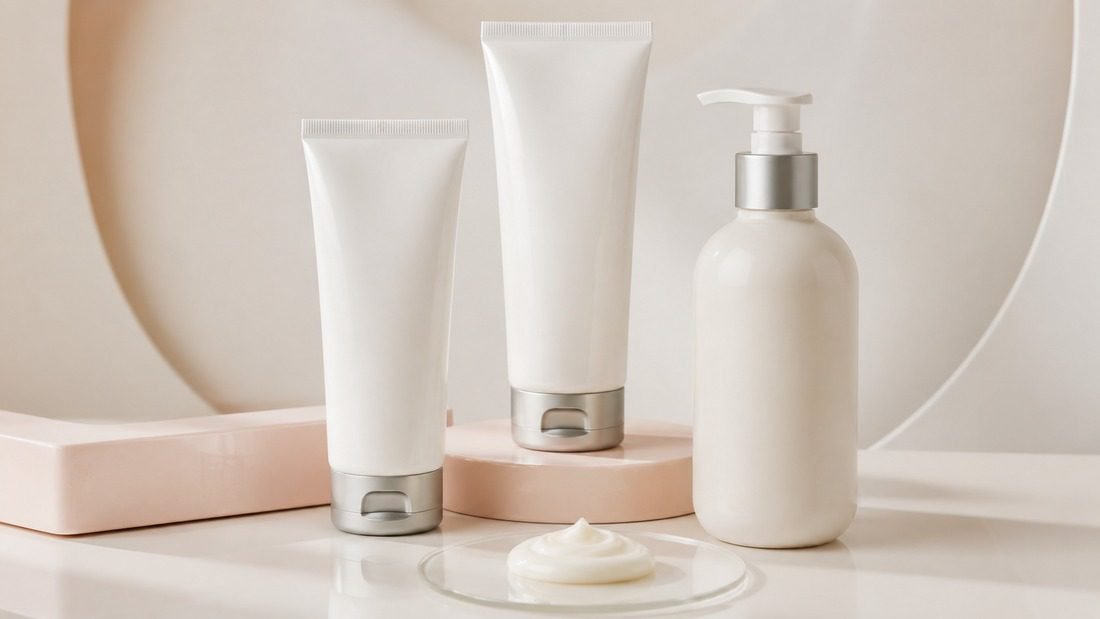
Conditioner produced at the Flavor Sources GMP facility
Conditioner is the essential complement to shampoo in nearly every hair-care routine, and a capable conditioner manufacturer gives brands a natural, high-repeat-purchase companion SKU. Flavor Sources formulates smoothing, detangling conditioners built around conditioning agents that restore softness and manageability after cleansing.
As an experienced conditioner manufacturer, we build formulas positioned to pair naturally with our shampoo formulations, though we also produce standalone conditioner lines for brands sourcing shampoo elsewhere. This page covers our formulation options, ingredients, MOQ, pricing and certifications for B2B buyers.
- What Is a Conditioner? Definition & Skin Science
- Why Choose Flavor Sources as Your Conditioner Manufacturer
- Conditioner Product Range & Formulation Options
- Key Active Ingredients We Formulate With
- Manufacturing Process: From Formula to Finished Conditioner
- MOQ, Pricing & Lead Time
- Packaging & Private Label Options
- Quality Control & Certifications
- Global Markets We Ship To
- Common Sourcing Mistakes to Avoid
- Sample Evaluation Checklist
- Sustainability & Long-Term Partnership
- How to Choose the Right Formula
- First-Time Buyer Support
- Shipping, Payment & Documentation
- Frequently Asked Questions
What Is a Conditioner? Definition & Skin Science
Conditioner is a hair-care product applied after shampooing, designed to smooth the hair cuticle, reduce tangling, and restore moisture and softness that cleansing can strip away. Unlike shampoo, which is surfactant-driven, conditioner formulation centers on cationic (positively charged) conditioning agents that bind to the hair shaft, which typically carries a slight negative charge after washing.
Because conditioner remains in contact with hair for a shorter period (rinse-out) or longer period (leave-in), formulation approach varies significantly by product type. Rinse-out conditioners prioritize immediate detangling and softness, while leave-in formulas are built lighter to avoid weighing hair down over a full day of wear.
Why Choose Flavor Sources as Your Conditioner Manufacturer
Flavor Sources supports conditioner brands from initial formula development through to export-ready bulk production. Because conditioner is so frequently purchased as a matching pair with shampoo, we pay close attention to how the two formulas complement each other in fragrance, feel and overall routine positioning. Buyers choose us for:
- Cationic conditioning agent formulation expertise for smooth, detangled hair
- 3,000 pcs MOQ per SKU — accessible for growing and established brands
- 22-30 day production lead time with order status tracking
- Free formula consultation and sample development
- GMP and ISO 22716 certified facility with COA per batch
- Rinse-out and leave-in formulation options available

Bulk conditioner production ready for private label export
Conditioner Product Range & Formulation Options
Our conditioner range spans several formulation directions to match different hair types and concerns:
| Formula Type | Key Direction | Texture / Format | Best For |
|---|---|---|---|
| Daily Rinse-Out Conditioner | Everyday detangling, softness | Medium-weight cream, broad appeal | Daily-use, all hair types |
| Deep Conditioning Treatment | Intensive moisture, damage repair | Richer cream texture | Dry and damaged-hair SKUs |
| Leave-In Conditioner | Lightweight, all-day manageability | Spray or light lotion texture | Fine hair, frequent-styling routines |
| Volumizing Conditioner | Lightweight body without weighing down | Thin, non-heavy formula | Fine and flat-hair product lines |
| Color-Protecting Conditioner | Color longevity, UV protection | Medium-weight cream, antioxidant-enriched | Color-treated hair product lines |
Key Active Ingredients We Formulate With
Conditioner formulation is about delivering effective detangling and softness without weighing hair down. Our library includes:
| Active Ingredient | Function | Why B2B Buyers Choose It |
|---|---|---|
| Cetrimonium Chloride | Cationic conditioning, detangling | Core technical ingredient for conditioner performance |
| Behentrimonium Chloride | Rich conditioning, softness | Popular for deep-conditioning treatment formulas |
| Argan Oil | Nourishing, shine-enhancing | Premium ingredient story for moisture-focused SKUs |
| Panthenol (Pro-Vitamin B5) | Hair conditioning, softness | Improves manageability and shine |
| Hydrolyzed Keratin | Strengthening, damage repair | Popular for damaged-hair positioning |
| Silicone Alternatives | Smoothness without buildup | Clean-beauty and silicone-free positioning |
| Vitamin E (Tocopherol) | Antioxidant, hair conditioning | Pairs well with any hero ingredient |
| Shea Butter | Rich emollience | Suited for deep-conditioning treatment formulas |
For fine or oily hair types, we recommend a lighter formula with fewer heavy conditioning agents; for coarse, curly or damaged hair, a richer formula with keratin and shea butter typically performs better.
Manufacturing Process: From Formula to Finished Conditioner
Conditioner production follows our standard six-stage workflow, adapted for cationic emulsion stability:
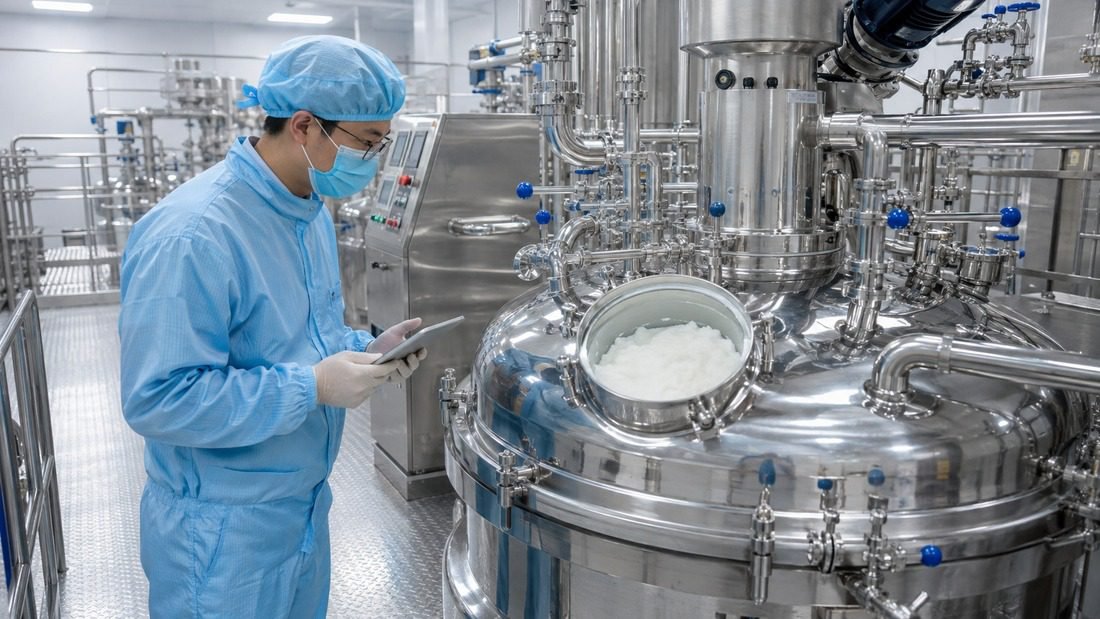
Flavor Sources GMP production line for conditioner manufacturing
Brief & Texture Matching
We match your brief to a validated base formula or scope a custom one.
Sample Development
R&D prepares your formula sample, typically ready in 7-10 working days.
Stability & Detangling Testing
Samples undergo stability and detangling performance testing before formula lock-in.
Packaging & Artwork Setup
Our design team finalizes bottle or tube artwork per your brand guidelines.
Bulk Production
Filling and sealing run on automated lines under GMP-controlled conditions, 22-26 days depending on volume.
QC, COA & Shipment
Each batch is tested and issued a COA before packing for export.
MOQ, Pricing & Lead Time
Conditioner pricing depends on texture richness and formula complexity.
| Order Type | MOQ | Lead Time | Indicative Price |
|---|---|---|---|
| Standard Sample | 1-5 pcs | 7-10 working days | USD 15-30 / formula |
| Trial Order | 3,000 pcs / SKU | 22-26 days | USD 0.80-1.45 / pcs (250ml) |
| Standard Bulk Order | 10,000+ pcs / SKU | 26-30 days | USD 0.62-1.10 / pcs (250ml) |
| Large Volume Order | 50,000+ pcs / SKU | 30-40 days | Custom quote — volume discount applies |
Deep conditioning treatments and color-protecting formulas sit at the higher end of this range; standard daily rinse-out formulas offer the most cost-efficient entry point.
Packaging & Private Label Options
Conditioner packaging should complement your shampoo line while supporting the specific format (rinse-out vs. leave-in). We support:
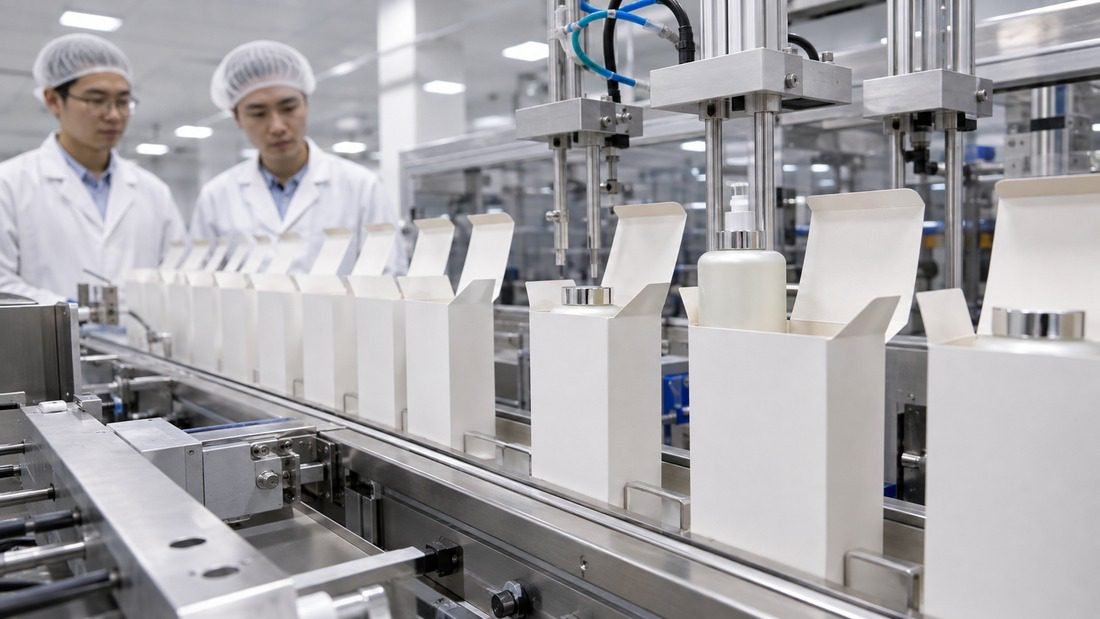
Custom packaging formats available for conditioner private label orders
- Pump bottle packaging matched to companion shampoo packaging
- Tub or jar packaging for deep-conditioning treatment masks
- Spray bottle packaging for leave-in conditioner formats
- Custom color, cap and print finish to match brand identity
- Multi-language labeling to meet EU, US and GCC compliance requirements
- Custom carton and case-pack configurations for retail and e-commerce
Explore our packaging design service for bottle and tub packaging options tailored to your conditioner line.
Quality Control & Certifications
Because conditioner formulas rely on cationic conditioning agents that must remain compatible with anionic components in complementary products, our QC process includes specific attention to formula stability and compatibility.

In-house QC laboratory testing every conditioner production batch
- GMP and ISO 22716 certified production facility
- Emulsion stability testing across temperature cycles
- Detangling and softness performance verification
- Full INCI documentation and SDS provided for regulatory filing
- CPSR / PIF documentation support available for EU market entry

Flavor Sources holds GMP, ISO 22716 and related cosmetic manufacturing certifications
Cationic conditioning agents work by binding to the hair shaft’s slightly negative surface charge after washing, a mechanism well documented in cosmetic chemistry; see this overview of hair conditioner for background on how this product category functions.
Global Markets We Ship To
Our conditioners are currently exported to hair-care brands and retailers across these regions:
- North America — DTC hair-care brands, Amazon FBA sellers
- Europe — pharmacy channel and private label retailers
- Middle East & GCC — halal-compliant formulation available on request
- Southeast Asia — humid-climate lightweight formula preference
- Latin America — strong conditioner category demand, curly-hair focus
- Northeast Asia — established, competitive conditioner market
Because conditioner and shampoo are frequently purchased together, we recommend coordinating fragrance and packaging design between the two SKUs to reinforce a cohesive routine positioning. This kind of paired-SKU planning is something our sales team is happy to walk through with you before formula development begins.
Common Sourcing Mistakes to Avoid When Choosing a Conditioner Manufacturer
We regularly speak with brand owners who came to us after a difficult experience with a previous supplier. Most of these problems trace back to a handful of avoidable mistakes made during the sourcing stage, before any formula was even developed. If you are evaluating more than one conditioner manufacturer, watch out for the following warning signs.
- Choosing a supplier based on unit price alone, without confirming GMP or ISO 22716 certification — the cheapest quote often hides quality or compliance gaps
- Skipping the physical sample stage and approving a formula from a description or photo alone
- Not confirming who owns the formula IP after development — clarify this in writing before production begins
- Underestimating real lead time by relying on a supplier’s best-case estimate rather than their typical delivery record
- Failing to request a COA and full INCI documentation before the first shipment leaves the factory
- Committing to a large first order instead of validating the market with a smaller trial batch
Sample Evaluation Checklist Before Bulk Approval
Once your conditioner sample arrives, a structured evaluation process helps you catch formula, packaging or compliance issues before they scale into a costly bulk production run. We recommend working through this checklist with your team.
- Texture and sensory feel — does the formula match your brief for absorption speed, tackiness and finish?
- Fragrance strength and stability — test the scent immediately and again after two weeks of storage
- Packaging fit and seal integrity — check for leaks, weak seals or print misalignment
- Label and artwork proof — confirm every regulatory element (INCI list, net weight, batch code placement) is present
- Real-world wear test — apply the product yourself under normal-use conditions, not just a quick swatch test
- Documentation completeness — confirm COA, SDS and INCI listing are provided alongside the physical sample
Sustainability, Compliance & Long-Term Partnership
Beyond a single order, most of our conditioner clients are building a repeatable, long-term sourcing relationship rather than a one-time purchase. Flavor Sources supports that goal with consistent formula documentation, batch-to-batch consistency testing, and proactive regulatory monitoring as ingredient restrictions evolve across different markets.
On the sustainability side, we offer recyclable and lower-plastic packaging alternatives across most conditioner formats, and can advise on ingredient sourcing transparency if your brand markets around clean-beauty or cruelty-free positioning. As global cosmetic regulation continues to tighten — particularly in the EU and increasingly in Southeast Asian markets — working with a manufacturer that tracks these changes proactively reduces the risk of a compliance issue disrupting your supply chain later.
How to Choose the Right Conditioner Formula for Your Market
Selecting the right conditioner formula is less about picking the “best” ingredient and more about matching the product to your target customer, price tier and regulatory environment. Buyers who skip this step often end up reformulating after the first production run, which adds cost and delays their launch timeline. Before you finalize a specification with any conditioner manufacturer, work through the following checklist.
- Identify the single biggest skin concern your target customer has, and lead the formula and marketing claim with that one benefit rather than combining too many actives
- Check the maximum permitted concentration for your hero active in each destination market’s cosmetic regulation before finalizing the formula
- Match your packaging format and price point to the retail channel you plan to sell through — e-commerce, pharmacy, spa or wholesale distribution each favor different formats
- Request a physical sample and test it yourself before approving bulk production, even if the formula looks correct on paper
- Confirm your supplier can provide INCI listing, SDS and COA documentation needed for customs clearance and marketplace listing approval
- Plan your MOQ around a realistic 90-day sales forecast rather than ordering the largest volume discount tier on your first order
Our sales and R&D team can walk through this checklist with you directly — most first-time buyers find that a short consultation call before formula development saves significant time and cost later in the process.
First-Time Buyer Support & What to Expect From Us
If this is your first time importing conditioner products from a Chinese manufacturer, our team is set up to guide you through each stage rather than leaving you to interpret a quotation on your own. From your first inquiry, you will work with a dedicated sales contact who coordinates directly with our R&D and production planning teams, so formula questions, packaging changes and shipping timeline updates all come through a single point of contact rather than being scattered across departments.
We typically recommend new buyers start with a standard formula sample and a smaller trial order before committing to a full container load, even if the unit price is less favorable at lower volumes. This approach lets you validate product-market fit, test your packaging and marketing assets, and confirm the import and regulatory process for your destination country — all before scaling up. Once your first order clears customs successfully, most buyers move to a standing repeat-order schedule with us, often adding new conditioner SKUs or expanding into other categories in our facial and body care range. We are happy to schedule an introductory call before you request a sample, if you would prefer to talk through your brief with our team first.
Shipping, Payment Terms & Import Documentation
Beyond formulation and packaging, international buyers need clarity on how an order actually moves from our factory to their warehouse. Flavor Sources handles export documentation for every conditioner shipment, whether you are importing a trial order or a container-load repeat order.
- Standard payment terms: 30% deposit to confirm production, 70% balance before shipment (T/T bank transfer); L/C accepted for larger orders
- Incoterms supported: EXW, FOB and CIF, with DDP available for select destination countries on request
- Standard export documentation: commercial invoice, packing list, certificate of origin, and COA per batch
- Freight options: sea freight for bulk orders, air freight for smaller or time-sensitive trial orders
- Regulatory support: INCI ingredient listing, SDS, and CPSR/PIF documentation assistance for EU, UK, US and GCC market entry
- Dedicated account manager for repeat orders, providing consolidated shipment and inventory planning support
If you are importing conditioner products for the first time, our team can also advise on the specific customs and cosmetic registration requirements for your destination market based on prior shipments to that region.
Frequently Asked Questions
What is the minimum order quantity for a custom conditioner?
Our standard MOQ is 3,000 pieces per SKU for a trial order, based on a 250ml format, with volume pricing improving above 10,000 pieces.
What is the difference between rinse-out and leave-in conditioner?
Rinse-out conditioner is applied after shampooing and washed out within a few minutes, while leave-in conditioner is lighter in texture and remains on hair throughout the day for ongoing manageability.
How long does conditioner sample development take?
Standard formula samples are ready in 7-10 working days; fully custom formulas typically take 10-18 working days.
Can conditioner be formulated silicone-free?
Yes, we offer silicone-alternative formulations for brands targeting clean-beauty or silicone-free positioning.
Do you provide private label packaging design?
Yes, our in-house design team creates bottle and tub artwork based on your brand guidelines, including mockups before bulk production.
What certifications does Flavor Sources hold?
We are GMP and ISO 22716 certified, with SDS, INCI documentation and CPSR support available for EU and international market entry.
Related Products in Our Hair Care Line
Explore other formulas in our Hair Care category, all available for OEM/ODM and private label from the same GMP-certified facility:
Request Your Conditioner Sample Today
Tell us your target market, MOQ and formulation goals — our team replies within 24 hours with pricing, lead time and free formula recommendations.
Get a Free Quote & SampleLearn more about the science behind our formulations from this reference: Hair Conditioner (Wikipedia). Also see our packaging design service and industry insights blog for more B2B sourcing guidance.