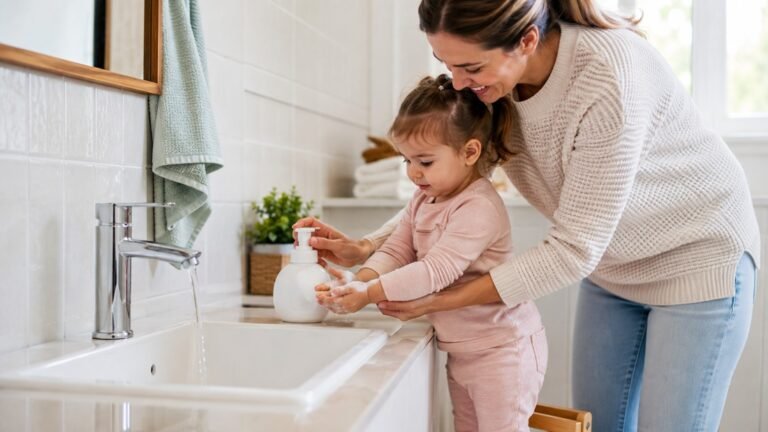
Baby Care vs Baby Wash in 2026: The Complete Quality Control Comparison for Smart Buyers
When comparing baby care vs baby wash quality control in 2026, the key difference lies in formulation complexity and testing scope: baby wash requires stricter microbiological controls due to its rinse-off nature, while baby care products (lotions, creams) demand more extensive stability and preservative efficacy testing. Both categories share core safety standards but diverge in risk profiles and regulatory scrutiny.
Table of Contents
- Understanding the Quality Control Divide
- The Core Question: What Sets Them Apart?
- Key Quality Control Parameters: A Comparison
- Practical Tips for Sourcing Baby Care Products
- Frequently Asked Questions
- 1. Is baby wash subject to the same regulations as baby care products?
- 2. Which product type requires more stability testing?
- 3. Can I use the same manufacturer for both baby care and baby wash?
- 4. What certifications should I look for in a baby care manufacturer?
- 5. How long does it take to develop a baby wash product?
- Trusted Expertise in Baby Care Manufacturing
- Ready to Ensure Quality for Your Baby Care Line?
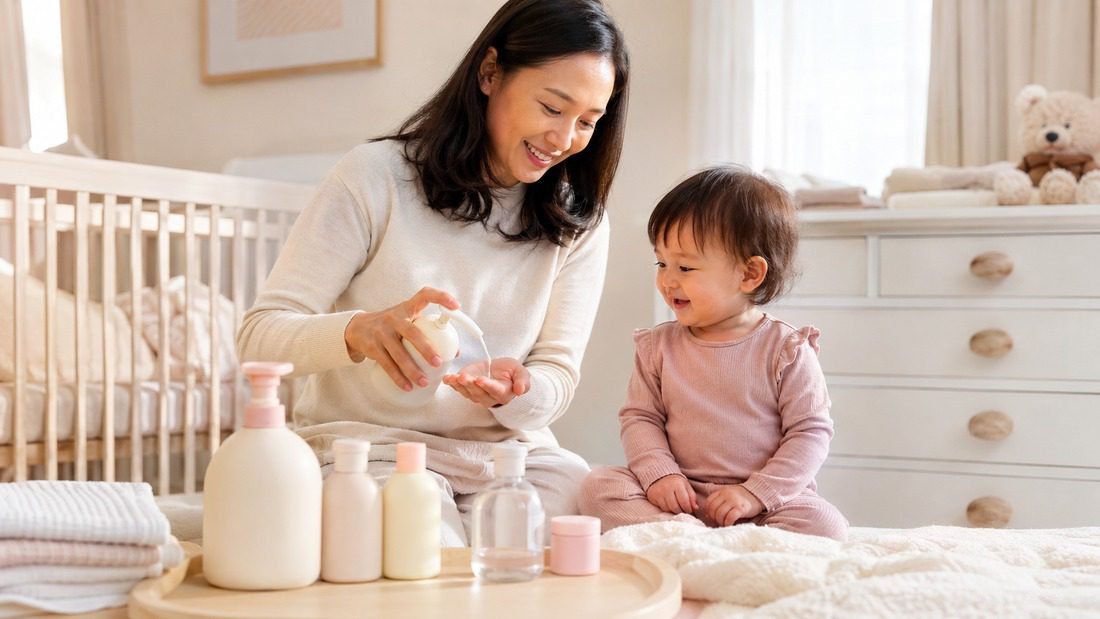
Understanding the Quality Control Divide
Baby care and baby wash are often lumped together, but their quality control (QC) requirements differ significantly. Baby wash—typically a liquid cleanser—must manage microbial risks in a high-water-content formula. Baby care products like lotions and creams, while also water-based, often contain more emulsifiers and preservatives that require careful balance. This article breaks down the QC nuances to help you make informed sourcing decisions.
The Core Question: What Sets Them Apart?
The central question is: which category demands more rigorous quality control? The answer is not binary. Baby wash faces higher microbiological risks because it is used in wet environments and often diluted. Baby care products, on the other hand, require extensive stability testing to ensure they remain safe and effective throughout their shelf life. Both categories must comply with similar regulations, but the emphasis differs.
Formulation and Ingredient Sensitivities
Baby wash formulations typically include mild surfactants, while baby care products rely on emollients and humectants. Each ingredient must be assessed for purity and safety. For instance, surfactants in baby wash need to be tested for irritation potential, whereas preservatives in baby care products must pass challenge tests. These differences dictate the QC protocols.
Microbiological Testing: A Critical Differentiator
Microbiological testing is more intense for baby wash. Products must be tested for microbial contamination before and after opening. Baby care products also require microbial testing, but the risk is lower due to lower water activity in some formats. However, any water-containing product needs preservative efficacy testing.
Stability and Compatibility Testing
Stability testing is crucial for both, but baby care products often have longer shelf lives and require accelerated stability tests to ensure formula integrity. Baby wash, being a rinse-off product, may have shorter contact time with skin, but its packaging compatibility (e.g., pumps) must be tested for leakage and contamination.
Key Quality Control Parameters: A Comparison
Below is a comparison table outlining the main QC parameters for baby care and baby wash.
| Parameter | Baby Care (Lotions/Creams) | Baby Wash (Liquid Cleansers) |
|---|---|---|
| Microbiological limits | <100 CFU/g | <100 CFU/g |
| Preservative efficacy test | Required | Required |
| Stability testing | 3 months accelerated, 36 months real-time | 3 months accelerated, 24 months real-time |
| Packaging compatibility | Pump, tube, jar | Bottle, pump |
| Skin irritation testing | HRIPT or similar | HRIPT or similar |
| Regulatory compliance | EU CPSR, FDA MoCRA, ASEAN | EU CPSR, FDA MoCRA, ASEAN |
Both categories share similar microbiological limits, but the testing methods and frequencies may vary. For example, baby wash may require more frequent microbial testing during production due to higher water activity.
Practical Tips for Sourcing Baby Care Products
When sourcing baby care products, consider these actionable tips:
- Choose manufacturers with specialized QC labs. Ensure they have in-house microbiology and stability testing capabilities. Our Quality Control page details our rigorous processes.
- Request full testing reports. Ask for microbiological, stability, and safety assessment reports. For baby care, stability data is paramount.
- Verify certifications. Look for ISO 22716, GMP, and other relevant certifications. See our Certificates for examples.
- Conduct a factory audit. A Factory Tour can reveal the actual conditions and QC practices.
- Start with samples. Use our Sample Development service to evaluate quality before mass production.
Case Studies: Real-World Applications
In the UK, a private label brand launched a baby wash line and faced challenges with preservative efficacy. By partnering with a manufacturer that conducted thorough challenge tests, they reformulated and achieved compliance. In the UAE, a distributor sourced baby care products and required additional stability testing to withstand high temperatures. Our Case Studies highlight similar scenarios. In Australia, an e-commerce seller needed fast turnaround for baby wash; rigorous microbiological testing ensured safety without delays. For US brands, FDA MoCRA compliance is critical, and our Export Support team assists with documentation.
Frequently Asked Questions
1. Is baby wash subject to the same regulations as baby care products?
Yes, both are regulated as cosmetics in most markets. However, baby wash may face additional scrutiny due to its rinse-off nature and potential for eye irritation. Compliance with EU CPSR, FDA MoCRA, and ASEAN guidelines is essential.
2. Which product type requires more stability testing?
Baby care products (lotions, creams) typically require longer stability testing because they remain on the skin and have longer shelf lives. Baby wash also requires stability testing, but the focus is often on packaging compatibility and microbial stability.
3. Can I use the same manufacturer for both baby care and baby wash?
Yes, many manufacturers produce both categories. However, ensure they have dedicated production lines or proper changeover procedures to prevent cross-contamination. Our Production Process page explains how we manage this.
4. What certifications should I look for in a baby care manufacturer?
Look for ISO 22716 (GMP), ISO 9001, and preferably ISO 14001. For baby products, additional certifications like organic or natural may be relevant. Always verify the scope of certification.
5. How long does it take to develop a baby wash product?
Typically, development takes 8-12 weeks, including formulation, testing, and stability studies. For baby care, it may take 12-16 weeks due to extended stability testing. Our Custom Formula service can expedite the process.
Trusted Expertise in Baby Care Manufacturing

 Scan to WhatsApp
About the Author
David Zhang has spent years in skincare formulation and quality control at Flavor Sources, a GMP ISO 22716-certified private label manufacturer based in Dongguan, China, serving brands in 50+ countries since 2000. Reach out to David's team for a custom formula consultation →
Ready to Ensure Quality for Your Baby Care Line?
Whether you're launching a baby wash or a full baby care range, quality control is non-negotiable. At Flavor Sources, we specialize in private label baby care with rigorous QC at every step. Request a free sample or get a quote today to discuss your project. Let our experts guide you through the complexities of baby care vs baby wash quality control in 2026.