Private Label Body Care Spa & Salon Owners Spain: Ultimate Quality Control Guide 2026
Sourcing private label body care for spa and salon owners in Spain requires rigorous quality control to ensure product safety, efficacy, and compliance with EU regulations. This guide provides a complete framework covering COA certificates, stability testing, batch testing, and pre-shipment inspection. By implementing these steps, you can confidently launch a premium body care line that meets Spanish and EU standards.
Table of Contents

Why Quality Control is Critical for Private Label Body Care in Spain
Spain's spa and salon industry is booming, with consumers increasingly demanding high-quality, safe, and effective body care products. As a spa or salon owner, your reputation depends on the products you use and sell. Poor quality can lead to skin reactions, damaged brand trust, and regulatory penalties. The EU Cosmetics Regulation (EC) No 1223/2009 sets strict requirements for product safety, labeling, and testing. Therefore, a robust quality control system is not optional—it is essential. This guide focuses on the key pillars of quality control for private label body care spa salon owners spain quality control, ensuring your products are compliant and market-ready.
Key Quality Control Documents and Tests
When sourcing private label body care, you must verify several documents and tests. Below is a comparison of essential quality control elements.
| Document/Test | Purpose | When Required |
|---|---|---|
| Certificate of Analysis (COA) | Confirms product meets specifications | Each batch |
| Stability Testing | Ensures product remains stable over time | Before launch and after formula changes |
| Batch Testing | Verifies consistency and safety of each production batch | Each batch |
| Pre-Shipment Inspection | Checks quality before shipping | Before each shipment |
| Safety Assessment (CPSR) | Confirms product safety for EU market | Before placing on market |
Certificate of Analysis (COA)
A COA is a document provided by the manufacturer that details the test results for a specific batch. It should include tests for appearance, odor, pH, viscosity, microbial content, and heavy metals. For body care quality control skincare, the COA is your first line of defense. Always request a COA for each batch and verify that it matches your specifications.
Stability Testing
Stability testing evaluates how your product changes over time under various conditions (temperature, humidity, light). This is crucial for body care stability testing skincare to determine shelf life and ensure the product remains safe and effective throughout its intended use. A typical stability test lasts 3-6 months and includes accelerated and real-time testing. Ensure your manufacturer provides a stability report before you commit to full production.
Batch Testing
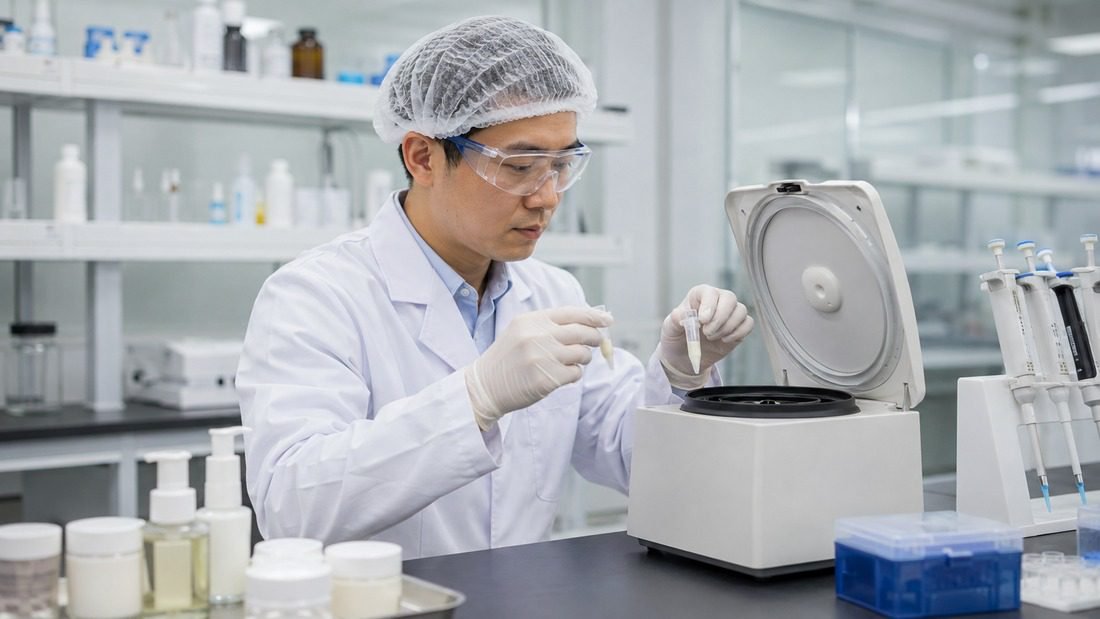
Batch testing involves testing samples from each production run to confirm they meet the established specifications. This includes microbial testing, pH testing, and viscosity testing. Body care batch testing is essential to catch any deviations early and prevent defective products from reaching the market. Your manufacturer should provide batch testing records for every batch produced.
Pre-Shipment Inspection
Before your products leave the factory, a pre-shipment inspection (PSI) should be conducted. This can be done by a third-party inspection company or your manufacturer's quality team. PSI checks product appearance, packaging, labeling, and quantity. It ensures that what you ordered is what you receive. For body care pre shipment inspection, insist on a detailed report with photos.
Practical Steps for Spa & Salon Owners
-
Select a Reputable Manufacturer: Choose a manufacturer with proven experience in private label body care and a robust quality management system. Look for certifications such as ISO 22716 (Good Manufacturing Practices) and ask for a factory tour or virtual audit. Flavor Sources offers Quality Control processes that meet international standards.
-
Define Clear Specifications: Work with your manufacturer to create detailed product specifications, including ingredients, texture, fragrance, color, and packaging. This will be the basis for all quality checks.
-
Request Samples and Test: Before bulk production, request samples and test them in your spa or salon. Gather feedback from staff and clients. Flavor Sources provides Sample Development services to refine your formula.
-
Review Documentation: Carefully review all quality documents, including COA, stability reports, and safety assessments. Ensure they comply with EU regulations. For more details on compliance, refer to the EU Cosmetics Regulation.
-
Conduct Pre-Shipment Inspection: Arrange for a pre-shipment inspection before each order. This can be done through a third-party or your manufacturer's Testing & Inspection service.
-
Monitor Post-Launch: Once products are in use, monitor for any adverse reactions or complaints. Keep records and work with your manufacturer to address any issues.
Case Studies: Quality Control Success in Spain and Beyond
While we cannot disclose specific client names, we have helped spa and salon owners in Spain and other markets achieve successful launches through rigorous quality control. For example, a spa chain in Barcelona wanted to launch a private label body care line. By implementing stability testing and batch testing, they identified a viscosity issue early and adjusted the formula, avoiding a costly recall. In the UAE, a salon owner used pre-shipment inspection to ensure packaging quality, resulting in a 30% reduction in returns. In the UK, a spa brand leveraged COA verification to comply with EU regulations and expand into the European market. These cases demonstrate that quality control is a worthwhile investment. For more insights, visit our Case Studies.

FAQ
What is a COA and why is it important?
A Certificate of Analysis (COA) is a document that confirms a batch meets specifications. It is important because it provides assurance of product quality and safety, and is often required for regulatory compliance.
How long does stability testing take?
Stability testing typically takes 3-6 months, depending on the product and conditions. Accelerated testing can provide preliminary results in a few weeks, but real-time testing is needed for accurate shelf-life determination.
Do I need a safety assessment for my private label body care products in Spain?
Yes, under EU regulations, all cosmetic products must have a Cosmetic Product Safety Report (CPSR) before being placed on the market. Your manufacturer should provide this or assist in obtaining it.
What should I look for in a pre-shipment inspection report?
A pre-shipment inspection report should include details on product appearance, packaging, labeling, quantity, and any defects. It should also include photos and a conclusion on whether the shipment meets your specifications.
Can I visit the factory before placing an order?
Yes, we encourage factory visits. Flavor Sources offers Factory Tour options, either in person or virtual, to help you assess our quality control processes.

 Scan to WhatsApp
About the Author
David Zhang has spent years in skincare formulation and quality control at Flavor Sources, a GMP ISO 22716-certified private label manufacturer based in Dongguan, China, serving brands in 50+ countries since 2000. Reach out to David's team for a custom formula consultation →
Ready to Launch Your Private Label Body Care Line?
Quality control is the foundation of a successful private label body care line. By following this guide, you can ensure your products meet the highest standards and delight your spa or salon clients. Flavor Sources specializes in Body Care manufacturing with comprehensive quality control. We offer Private Label Skincare services and can tailor formulas to your needs. To experience our quality firsthand, request a sample or get a quote today. Let us help you bring your vision to life with confidence.