The Definitive 2028 Guide to Serum Quality Control for Distributors: 7 Essential Checks for Reliable Sourcing
For serum quality control distributors, the key to reliable sourcing in 2028 is a documented, multi-stage testing protocol: batch testing, stability studies, COA verification, and pre-shipment inspection. This definitive guide explains each step, so you can protect your brand and meet regulatory demands with confidence.
Table of Contents
- Why Serum Quality Control Matters for Distributors
- The Core Pillars of Serum Quality Control
- Key Tests and Standards: A Comparison Table
- Stability Testing: The Long Game of Serum Quality
- The Role of COA and Pre-Shipment Inspection
- Practical Recommendations for Distributors
- Case Examples: Lessons from Global Markets
- Frequently Asked Questions
- Ensure Your Serum Quality with a Trusted Partner
Why Serum Quality Control Matters for Distributors
As a distributor, your reputation hinges on product consistency. A single compromised batch can trigger recalls, regulatory penalties, and lost retail partnerships. Unlike creams or lotions, serums are highly concentrated, often containing delicate actives like vitamin C, retinol, or peptides. These ingredients are sensitive to light, heat, and oxygen, making serum quality control distributors a critical link in the supply chain. Without rigorous oversight, you risk delivering products that fail to meet label claims or, worse, cause consumer irritation. In 2028, with tightening global regulations, proactive quality control is not optional—it is a competitive advantage.
The Core Pillars of Serum Quality Control
Effective quality control rests on four pillars: raw material verification, in-process monitoring, finished product testing, and documentation. Each pillar addresses specific risks. For serums, the most common pitfalls include microbial contamination, pH drift, and active ingredient degradation. A robust system catches these issues before they reach your warehouse.
Raw Material Verification
Every batch of raw materials—from hyaluronic acid to botanical extracts—must arrive with a Certificate of Analysis (COA). Your manufacturer should verify identity, purity, and potency. For distributors, this means auditing supplier qualifications and requesting retention samples. Without this step, even the best formulation can fail.
In-Process Monitoring
During production, parameters like mixing speed, temperature, and pH must be controlled. For serum, pH is especially critical: it affects stability and skin compatibility. Real-time monitoring ensures that deviations are corrected immediately, not after thousands of units are filled.
Finished Product Testing
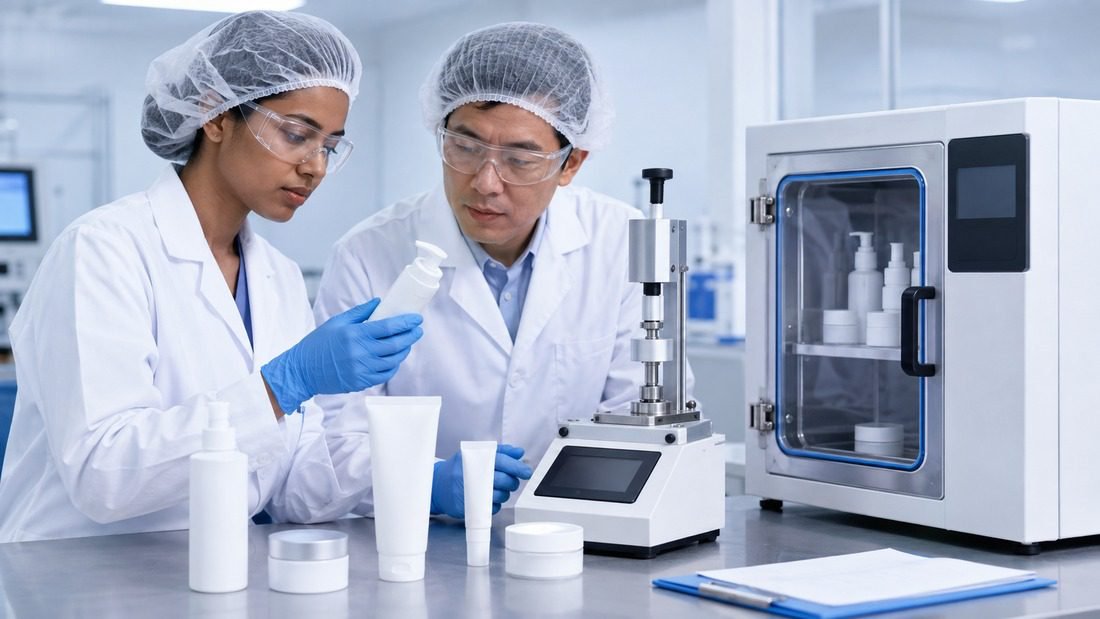
Finished serums undergo a battery of tests, including microbial limits, heavy metals, and active content. This is where serum batch testing proves its worth. Each batch should be tested, not just a composite sample, to ensure uniformity.
Documentation and Traceability
Every step must be documented. A complete batch record allows you to trace any issue back to its source. This documentation is also essential for regulatory audits and customer inquiries.
Key Tests and Standards: A Comparison Table
To help you evaluate your manufacturer's protocol, here is a comparison of essential serum quality control tests.
| Test Type | Purpose | Typical Method | Frequency |
|---|---|---|---|
| Microbial Limits | Detect bacteria, yeast, mold | USP <61>, <62> | Every batch |
| Heavy Metals | Ensure safety (lead, arsenic, etc.) | ICP-MS | Every batch |
| pH | Verify skin compatibility and stability | pH meter | Every batch |
| Viscosity | Confirm texture and fill accuracy | Viscometer | Every batch |
| Active Content | Validate label claims (e.g., vitamin C) | HPLC | Every batch |
| Stability | Predict shelf life and formula integrity | Accelerated & real-time | Quarterly or per formula |
| Preservative Efficacy | Confirm antimicrobial protection | USP <51> | Per formula |
This table highlights the non-negotiables. If your manufacturer skips any of these, consider it a red flag.

Stability Testing: The Long Game of Serum Quality
Stability testing is often overlooked but is vital for serum stability testing skincare. It predicts how your product will age under various conditions. Accelerated stability testing exposes samples to elevated temperatures (e.g., 40°C) for three months, simulating two years of shelf life. Real-time testing, conducted at 25°C, confirms these predictions. For distributors, stability data ensures that your serum remains effective and safe throughout its shelf life, even in diverse climates. Always request stability reports for each formula and packaging configuration. Without them, you risk selling degraded products.
The Role of COA and Pre-Shipment Inspection
A serum COA certificate is your proof that a batch meets specifications. It should include test results, specifications, and a batch number. But a COA alone is not enough. Serum pre shipment inspection adds another layer of assurance. This involves a third-party inspector checking the finished goods before they leave the factory. They verify quantity, packaging integrity, labeling, and sometimes even re-test samples. For distributors, this step prevents costly returns and chargebacks. Make pre-shipment inspection a contractual requirement.
Practical Recommendations for Distributors
- Qualify Your Manufacturer: Audit their facility, review their quality manual, and check certifications like ISO 22716 (GMP).
- Demand Batch-Specific COAs: Never accept a generic COA. Each batch must have its own.
- Review Stability Protocols: Ensure they follow ICH guidelines and include both accelerated and real-time data.
- Schedule Pre-Shipment Inspections: Use a reputable third-party inspector. For high-value orders, inspect 100% of units.
- Maintain Retention Samples: Keep samples from each batch for at least one year after expiry.
- Train Your Team: Educate your quality team on serum-specific risks.
- Leverage Technology: Use blockchain or QR codes for traceability.
These steps will help you avoid recalls and build trust with your retail partners.
Case Examples: Lessons from Global Markets
- United Kingdom: A distributor faced a recall after a vitamin C serum oxidized prematurely. The root cause was inadequate stability testing. After implementing rigorous stability protocols, they reduced returns by 60%.
- UAE: A distributor in Dubai received a batch with microbial contamination due to poor preservative efficacy. Pre-shipment inspection caught the issue before customs clearance, saving them from a $50,000 loss.
- United States: A California-based distributor avoided a FDA warning letter by providing complete batch records and COAs during an audit. Their proactive documentation was praised.
- Australia: An Australian distributor used third-party pre-shipment inspection to verify fill weights, uncovering a 5% underfill that would have violated trade measurement laws.
These examples underscore the value of a robust quality control system.
Frequently Asked Questions
1. How often should serum batches be tested?
Every batch should undergo microbial, heavy metal, pH, and active content testing. Stability testing is typically done per formula and packaging, not every batch.
2. What is a serum COA certificate?
A COA (Certificate of Analysis) is a document that reports the test results for a specific batch, confirming it meets specifications. It should include batch number, test methods, and acceptance criteria.
3. Why is pre-shipment inspection important?
Pre-shipment inspection catches issues like packaging defects, labeling errors, and quantity discrepancies before goods leave the factory, preventing costly returns and regulatory problems.
4. How long does stability testing take?
Accelerated stability testing takes about 3 months, while real-time testing can take 2-3 years. However, accelerated data is often sufficient for initial launch.
5. What should distributors do if a batch fails testing?
Reject the batch, request a replacement, and investigate the root cause with the manufacturer. Document everything for future reference.
6. Are there specific regulations for serum quality control?
Yes, regulations vary by region. In the EU, CPSR (Cosmetic Product Safety Report) is required. In the US, MoCRA (Modernization of Cosmetics Regulation Act) mandates adverse event reporting and good manufacturing practices. Always check local requirements.

 Scan to WhatsApp
About the Author
David Zhang has spent years in skincare formulation and quality control at Flavor Sources, a GMP ISO 22716-certified private label manufacturer based in Dongguan, China, serving brands in 50+ countries since 2000. Reach out to David's team for a custom formula consultation →
Ensure Your Serum Quality with a Trusted Partner
As a distributor, you cannot afford to compromise on quality. Partner with a manufacturer who prioritizes rigorous quality control at every stage. At Flavor Sources, we adhere to ISO 22716 and provide comprehensive batch testing, stability studies, and pre-shipment inspections. Our Serum line is crafted with precision, and we support distributors with full documentation and export compliance. Ready to elevate your serum offerings? Request a free sample or get a quote today. Let us help you deliver reliable, high-quality serums to your market.