Cream & Lotion vs Gel Moisturizer in 2027: The Complete Quality Control Comparison
For most private label skincare programs in 2027, cream lotion vs gel moisturizer quality control comes down to one decisive factor: emulsion stability. Creams and lotions, being oil-in-water or water-in-oil emulsions, demand tighter process control than gels, but they also offer more predictable shelf-life data. Gels win on visual clarity and lightweight feel, yet they carry higher microbial and syneresis risks. The verdict: if your brand prioritizes long-term stability and broad regulatory acceptance, cream and lotion formats remain the safer bet—provided your manufacturer runs a rigorous QC protocol.
Table of Contents
- What Makes Cream Lotion vs Gel Moisturizer Quality Control So Different?
- Side-by-Side: Cream & Lotion vs Gel Moisturizer QC Checkpoints
- Practical Recommendations for Brands and Importers
- Case Evidence: How Format Choice Affected Real Shipments
- FAQ: Cream Lotion vs Gel Moisturizer Quality Control
- Which format is easier to pass a preservative challenge test?
- Can a gel moisturizer achieve the same shelf life as a cream lotion?
- What QC tests are non-negotiable for either format?
- Does packaging affect quality control for gels more than creams?
- How does 2027 MoCRA affect gel vs cream documentation?
- Can I switch from gel to cream lotion without re-testing?
- About the Author
- Ready to Choose the Right Moisturizer Format for Your Brand?
What Makes Cream Lotion vs Gel Moisturizer Quality Control So Different?
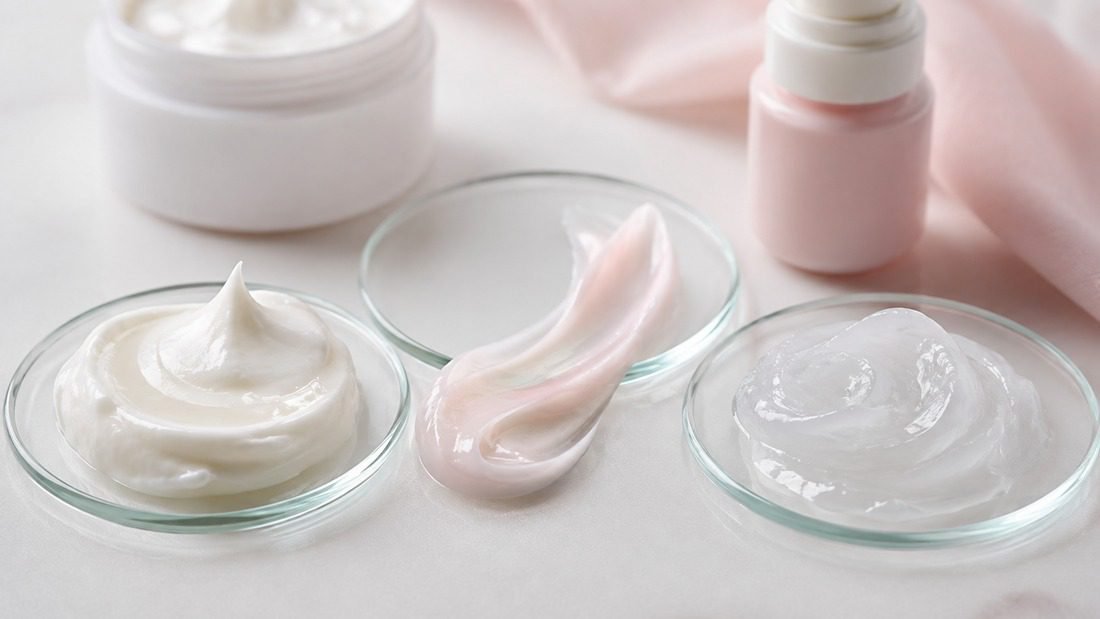
Quality control for moisturizers is not a single test—it is a chain of decisions from formula design to final fill. The core difference lies in the base structure. A cream or lotion is a two-phase system: oil droplets dispersed in water (or vice versa), stabilized by emulsifiers. A gel is typically a single-phase, water-based system thickened by polymers like carbomer or xanthan gum.
That structural gap changes everything downstream. Emulsions require homogenization, precise temperature curves, and cooling rates that dictate droplet size and viscosity. Gels require careful pH adjustment to trigger polymer swelling, plus preservative systems that work in a high-water-activity environment. In short, cream lotion vs gel moisturizer quality control is a comparison between managing physical instability and managing chemical/microbial instability.
Why 2027 Regulations Raise the Stakes
Regulators in the EU, US, and ASEAN have tightened documentation requirements. The EU Cosmetics Regulation (EC) No 1223/2009 mandates a Cosmetic Product Safety Report (CPSR) for every SKU, while the US FDA's Modernization of Cosmetics Regulation Act (MoCRA) now demands adverse event reporting and facility registration. Both frameworks reward formats with well-characterized stability profiles. Emulsions, with decades of published rheology data, are easier to defend in a safety report than novel gel systems.
Side-by-Side: Cream & Lotion vs Gel Moisturizer QC Checkpoints
The table below summarizes how each format performs across six critical quality control checkpoints. This is the operational heart of any private label cream & lotion comparison.
| QC Checkpoint | Cream & Lotion | Gel Moisturizer |
|---|---|---|
| Emulsion/System Stability | Requires strict homogenization; risk of phase separation if cooling rate is off | Single-phase; risk of syneresis (water weeping) and polymer degradation |
| Microbial Risk | Oil phase can harbor microbes if preservative partition is poor; challenge test essential | High water activity demands robust preservative; challenge test even more critical |
| Viscosity Control | Sensitive to shear and temperature; needs in-process viscometry | Sensitive to pH and electrolyte levels; needs tight pH monitoring |
| Fill Accuracy | Higher viscosity aids fill weight consistency | Lower viscosity can cause dripping and weight variance |
| Sensory Consistency | Rich, occlusive feel; batch-to-batch texture variance possible | Light, cooling feel; clarity and spreadability must be uniform |
| Regulatory Documentation | Extensive stability data available; easier CPSR/PIF preparation | Requires additional justification for preservative efficacy and pH drift |
Key Terms Defined
- Phase separation: The breakdown of an emulsion into oil and water layers, often caused by insufficient emulsifier or wrong processing temperature.
- Syneresis: The expulsion of liquid from a gel, leading to a shrunken, weepy appearance.
- Challenge test: A microbiological test that inoculates a product with known organisms to verify preservative efficacy.
Practical Recommendations for Brands and Importers
If you are sourcing from a contract manufacturer, your choice between cream and lotion versus gel should be driven by your target market and risk tolerance—not by trend alone.
For Stability-First Brands
Choose cream and lotion formats when your product must survive long ocean transit and varied warehouse temperatures. Emulsions with proven emulsifier systems (e.g., glyceryl stearate, cetearyl alcohol) offer more forgiving stability profiles. Request accelerated stability data at 40°C/75% RH for 12 weeks. Our Quality Control team can share typical protocols.
For Lightweight, Fast-Absorbing SKUs
Gels are ideal for acne-prone or humid-climate consumers. However, insist on a preservative efficacy test (ISO 11930) and a pH drift study. If your manufacturer cannot provide these, the gel format becomes a liability. Consider a Custom Formula that blends gel and emulsion technology—such as a gel-cream—to balance sensory appeal with stability.
For Private Label Speed
If you need rapid market entry, cream and lotion bases are often available as stock formulations, reducing development time. Explore our Private Label Skincare service to see ready-to-brand options. Gels, by contrast, frequently require custom polymer selection and longer stability testing.
Case Evidence: How Format Choice Affected Real Shipments
We have observed distinct outcomes across different markets without naming specific clients.
UK Brand: Cream Lotion Wins on Shelf Life
A UK-based skincare brand launched a shea butter lotion for dry skin. During a 6-month stability study at 25°C and 40°C, the emulsion showed no phase separation and less than 2% viscosity change. The same brand tested a gel version with 2% hyaluronic acid; after 3 months at 40°C, syneresis appeared, and the batch was rejected. The cream lotion format passed all QC gates, while the gel required reformulation.
UAE Importer: Gel Moisturizer Excels in Humid Climate
An importer in the UAE needed a lightweight moisturizer for year-round humidity. A carbomer-based gel, properly preserved with phenoxyethanol and tested via ISO 11930, delivered a non-greasy feel that consumers preferred. However, the importer had to enforce strict fill-weight checks because the gel's low viscosity caused a 3% fill variance on an older filling line. After switching to a servo-controlled filler, the variance dropped below 0.5%.
Australia E-commerce Seller: Gel-Cream Hybrid Reduces Returns
An Australian e-commerce seller combined the best of both worlds with a gel-cream hybrid. The emulsion-gel structure provided the light feel of a gel with the stability of a lotion. Return rates due to texture complaints fell by 18% compared to a pure gel. This hybrid approach is increasingly common in 2027 as formulators learn to balance polymer and emulsifier systems.
These cases underscore that cream lotion vs gel moisturizer quality control is not about declaring a universal winner—it is about matching format strengths to supply chain realities. For more examples, see our Case Studies.
FAQ: Cream Lotion vs Gel Moisturizer Quality Control
Which format is easier to pass a preservative challenge test?
Creams and lotions often have an oil phase that can absorb preservatives, potentially reducing free preservative concentration. Gels, with high water content, require preservatives that are fully water-soluble and stable at the product's pH. Neither is inherently easier—both require a tailored preservative system and a validated ISO 11930 test.
Can a gel moisturizer achieve the same shelf life as a cream lotion?
Yes, but it usually requires more rigorous pH control and packaging that prevents water loss. Gels are more prone to microbial growth if the preservative system is inadequate. A well-formulated gel with a chelating agent and a broad-spectrum preservative can match a lotion's 24–36 month shelf life, provided stability testing is thorough.
What QC tests are non-negotiable for either format?
At minimum: accelerated stability (12 weeks at 40°C), freeze-thaw cycles (3 cycles), viscosity or pH drift, microbial challenge test, and fill weight verification. For creams and lotions, add phase separation inspection. For gels, add syneresis evaluation. Our Testing & Inspection service covers all these.
Does packaging affect quality control for gels more than creams?
Yes. Gels are more sensitive to air exposure and evaporation. Airless pumps or tube packaging with small orifices help maintain gel integrity. Creams and lotions are more forgiving but still benefit from airless systems to prevent contamination. Packaging choice should be validated alongside the formula.
How does 2027 MoCRA affect gel vs cream documentation?
MoCRA requires adverse event reporting and facility registration for US-bound products. Both formats need a safety substantiation file. However, gels may require additional data on pH drift and preservative efficacy because their high water activity is a known risk factor. Creams and lotions often have more historical safety data to reference.
Can I switch from gel to cream lotion without re-testing?
No. Any change in base format is a major formula change. You must re-run stability, challenge, and compatibility tests. Even switching emulsifier or polymer type within the same format triggers re-validation. Always consult your manufacturer's QC team before assuming equivalence.
About the Author

 Scan to WhatsApp
About the Author
David Zhang has spent years in skincare formulation and quality control at Flavor Sources, a GMP ISO 22716-certified private label manufacturer based in Dongguan, China, serving brands in 50+ countries since 2000. Reach out to David's team for a custom formula consultation →
Ready to Choose the Right Moisturizer Format for Your Brand?
Whether you lean toward the rich stability of a cream and lotion or the lightweight appeal of a gel, the quality control behind your formula determines your brand's reputation. At Flavor Sources, we help brands, importers, and e-commerce sellers navigate cream lotion vs gel moisturizer quality control with transparent testing and scalable production.
Request a free sample of our cream and lotion bases, or get a quote for your custom project. Our team will guide you through stability protocols, preservative selection, and packaging compatibility—so your 2027 launch is built on reliable data, not guesswork.