The Complete 2028 Checklist for Facial & Body Mask Compliance Certification for Startups
Navigating facial body mask compliance certification startups is critical for market success in 2028. Startups must secure EU CPSR, FDA MoCRA registration, ISO 22716 GMP, and halal certification to ensure product safety and legal market entry. This checklist simplifies the complex regulatory landscape.
Table of Contents
- Why Compliance Certification Is Non-Negotiable for Startups
- Key Regulations and Standards for Facial & Body Masks
- Step-by-Step Compliance Checklist for Startups
- Practical Tips for a Smooth Certification Process
- Case Studies: How Startups Succeeded
- Frequently Asked Questions (FAQ)
- Ready to Launch Your Compliant Facial & Body Mask Line?
Why Compliance Certification Is Non-Negotiable for Startups
For emerging beauty brands, compliance is often an afterthought—but it shouldn't be. Regulatory bodies worldwide are tightening rules on cosmetic products, and facial and body masks are under particular scrutiny due to their leave-on nature and sensitive application areas. Startups that prioritize facial body mask compliance certification startups from day one avoid costly recalls, legal penalties, and reputational damage. Beyond risk mitigation, certifications serve as a trust signal to retailers and consumers. In 2028, market access will depend on verifiable compliance. This guide outlines the essential steps for startups to achieve certification efficiently and cost-effectively.
Key Regulations and Standards for Facial & Body Masks
Startups must navigate a patchwork of global regulations. The table below summarizes the primary requirements for major markets, focusing on facial and body masks.
| Region | Regulation/Standard | Key Requirements | Certification Body |
|---|---|---|---|
| EU | EU Cosmetics Regulation (EC) No 1223/2009 | Cosmetic Product Safety Report (CPSR), Responsible Person, CPNP notification | Qualified safety assessor |
| USA | FDA MoCRA (Modernization of Cosmetics Regulation Act) | Facility registration, product listing, adverse event reporting, safety substantiation | FDA (via registration portal) |
| International | ISO 22716:2007 | Good Manufacturing Practices (GMP) for cosmetics | Accredited certification bodies |
| Global (voluntary) | Halal Certification | Compliance with Islamic dietary and hygiene laws | Halal certification authorities |
| Global (voluntary) | ISO 9001, ISO 14001 | Quality and environmental management | Accredited certification bodies |
Each regulation demands specific documentation and testing. For instance, the EU CPSR requires a detailed safety assessment by a qualified professional, while FDA MoCRA mandates facility registration and product listing. Startups should also consider voluntary certifications like halal to access Muslim-majority markets. Understanding these requirements early prevents bottlenecks.
EU CPSR: The Gateway to European Markets
The Cosmetic Product Safety Report (CPSR) is mandatory for any facial or body mask sold in the EU. It involves a comprehensive safety assessment of the formulation, packaging, and intended use. Startups must engage a qualified safety assessor and compile a Product Information File (PIF). The CPSR must be updated with any formula changes. Partnering with a manufacturer experienced in EU regulations streamlines this process.
FDA MoCRA: Compliance for the US Market
The FDA's MoCRA introduces stringent requirements for cosmetic facilities and products. Startups must register their manufacturing facilities (including contract manufacturers) and list each product with the FDA. Additionally, safety substantiation and adverse event reporting are mandatory. Non-compliance can lead to product seizure and injunctions. Early registration and thorough documentation are key.
ISO 22716: GMP for Cosmetics
ISO 22716 provides guidelines for Good Manufacturing Practices (GMP), covering production, control, storage, and shipment. While voluntary in some regions, it is often a prerequisite for retailers and distributors. A GMP-certified manufacturer ensures consistent product quality and safety. Startups should verify their manufacturer's GMP status and request audit reports.
Halal Certification: Accessing Muslim Markets
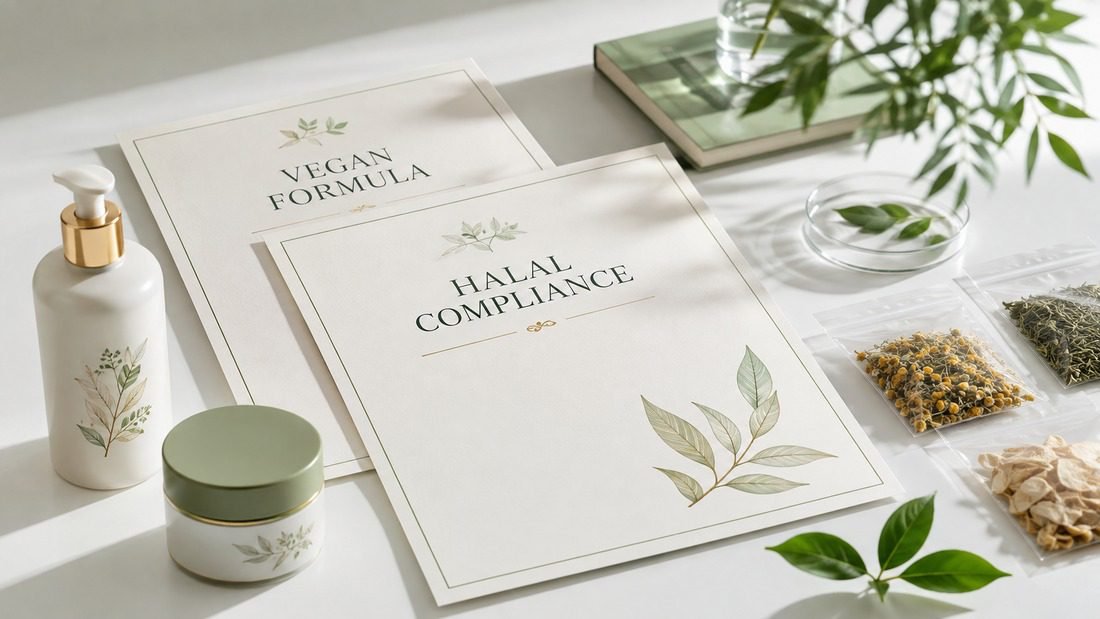
Halal certification confirms that a product does not contain prohibited substances and is manufactured according to Islamic principles. For facial and body masks, this involves ingredient screening, segregation, and documentation. Halal-certified products are increasingly sought after in Southeast Asia, the Middle East, and beyond. Startups targeting these regions should prioritize halal certification.

Step-by-Step Compliance Checklist for Startups
To simplify the journey, follow this actionable checklist tailored for facial and body mask startups.
1. Understand Your Target Markets
Identify where you plan to sell. Each market has unique regulations. For example, the EU requires a CPSR and a Responsible Person, while the US requires FDA registration. Prioritize markets based on your business strategy and allocate resources accordingly.
2. Choose a GMP-Certified Manufacturer
Your manufacturing partner is your compliance ally. Select a manufacturer with ISO 22716 GMP certification and experience in your target markets. They should provide documentation, support audits, and ensure consistent quality. Facial & Body Mask manufacturers with GMP credentials reduce your compliance burden.
3. Prepare Product Documentation
Compile all necessary documents: formulation, raw material safety data sheets (SDS), stability testing, microbiological testing, and packaging compatibility. For the EU, a CPSR is required; for the US, safety substantiation under MoCRA. Accurate documentation accelerates certification.
4. Conduct Required Testing
Depending on the market, tests may include stability, challenge testing, heavy metals, and microbial limits. Testing ensures product safety and supports claims. Work with accredited laboratories and keep records for at least five years.
5. Register and Notify
For the EU, notify via CPNP and appoint a Responsible Person. For the US, register facilities and list products with the FDA. For other markets, follow local notification procedures. Timely registration prevents delays.
6. Obtain Voluntary Certifications
If targeting specific segments, pursue halal, vegan, or organic certifications. These enhance marketability and consumer trust. Ensure your supply chain supports these claims.
7. Maintain Ongoing Compliance
Compliance is not a one-time event. Monitor regulatory changes, update documentation, and conduct regular audits. Establish a quality management system to sustain compliance.
Practical Tips for a Smooth Certification Process
Startups can avoid common pitfalls by following these tips:
- Start early: Certification takes time; begin during product development.
- Budget for compliance: Allocate funds for testing, certification fees, and consultant support.
- Leverage manufacturer expertise: Choose a manufacturer with in-house regulatory support.
- Use digital tools: Compliance software can track documentation and deadlines.
- Stay informed: Subscribe to regulatory updates from authorities like the FDA and EU Commission.
By integrating compliance into your business plan, you build a foundation for sustainable growth.
Case Studies: How Startups Succeeded
While specific company names are withheld, consider these scenarios:
- A UK-based startup launched a range of clay masks. By partnering with a GMP-certified manufacturer and obtaining EU CPSR, they entered the EU market within six months and secured listings with major retailers.
- A UAE startup focused on halal-certified sheet masks. They worked with a manufacturer experienced in halal compliance, allowing them to export to Southeast Asia and the Middle East, achieving rapid growth.
- A US startup navigated FDA MoCRA by registering facilities early and conducting safety substantiation. They avoided regulatory hurdles and launched on time, gaining investor confidence.
- An Australian startup used ISO 22716 certification as a marketing tool, emphasizing quality and safety to consumers. This differentiation helped them stand out in a crowded market.
These examples highlight the importance of proactive compliance and strategic partnerships.
Frequently Asked Questions (FAQ)
Q1: What is the difference between EU CPSR and FDA MoCRA?
A1: EU CPSR is a safety assessment required for cosmetics in the EU, while FDA MoCRA is a US regulation requiring facility registration and product listing. Both aim to ensure product safety but have different processes and documentation.
Q2: Do I need halal certification for facial and body masks?
A2: Halal certification is not mandatory in most markets, but it is essential if you target Muslim consumers. It demonstrates compliance with Islamic principles and can be a strong marketing advantage.
Q3: How long does it take to get ISO 22716 certification?
A3: The timeline varies depending on the manufacturer's readiness. Typically, it takes 3-6 months to implement GMP and undergo certification audit. Choosing an already certified manufacturer saves time.
Q4: Can I use the same compliance documentation for multiple markets?
A4: Some documentation, like safety data sheets and testing reports, can be reused. However, each market has specific requirements (e.g., CPSR for EU, MoCRA for US) that must be addressed separately.
Q5: What are the costs involved in compliance for startups?
A5: Costs vary by market and product. Budget for testing (e.g., stability, microbiology), certification fees, and consultant fees. Investing in compliance upfront prevents costly recalls later.
Q6: How do I choose a compliant manufacturer?
A6: Look for ISO 22716 GMP certification, experience with your target markets, and a willingness to provide documentation. Request audits and check references. A reliable manufacturer is your partner in compliance.

 Scan to WhatsApp
About the Author
David Zhang has spent years in skincare formulation and quality control at Flavor Sources, a GMP ISO 22716-certified private label manufacturer based in Dongguan, China, serving brands in 50+ countries since 2000. Reach out to David's team for a custom formula consultation →
Ready to Launch Your Compliant Facial & Body Mask Line?
Don't let compliance delays hold back your startup. Partner with a GMP-certified manufacturer who understands the regulatory landscape. At Flavor Sources, we specialize in helping startups navigate facial body mask compliance certification startups requirements. Our facilities are ISO 22716 certified, and we offer full support for EU CPSR, FDA MoCRA, and halal certification. Request a free sample of our facial and body masks to experience our quality firsthand. Or get a quote tailored to your needs. Let us help you bring safe, compliant, and market-ready products to consumers worldwide.