Ultimate 2027 Cream Lotion Glossary Italy: 30 Essential Terms for Confident Buyers
Sourcing cream and lotion products in Italy means decoding a dense vocabulary of OEM/ODM, regulatory, and formulation terms. This cream lotion glossary italy guide explains 30 essential terms in plain English, flags the EU compliance checkpoints that matter for 2027, and shows buyers how to use each term confidently in briefs, quotes, and contracts.
Table of Contents
- Why a Cream & Lotion Glossary Matters for Italian Buyers
- The Core Vocabulary: Commercial and Sourcing Terms
- Formulation Terms Every Buyer Should Recognize
- Production and Quality Terms That Protect Your Brand
- EU Compliance Terms for the Italian Market
- Practical Sourcing Steps for 2027
- Case Evidence: How Glossary Clarity Saves Time
- FAQ
- Ready to Source Cream & Lotion with Confidence?
Why a Cream & Lotion Glossary Matters for Italian Buyers
Italy is one of Europe's most sophisticated beauty markets, and its buyers are famously detail-oriented. Yet OEM/ODM conversations often stall because both sides use the same words differently. A “sample” may mean a lab batch or a pilot run; “private label” may or may not include formula ownership.
Misreading one term can shift costs, timelines, or compliance liability. A clear cream lotion glossary italy buyers can share with suppliers removes that friction before the first quote is signed.
This guide groups the most-used cream & lotion manufacturing terms into four clusters: commercial models, formulation, production and quality, and EU compliance. Each entry includes a practical note on why it matters when you source.
The Core Vocabulary: Commercial and Sourcing Terms
Start with the commercial layer, because these terms define who owns what. Italian distributors and brand owners often negotiate these points first, and they shape every later decision about formula, packaging, and export.
OEM vs ODM vs Private Label
These three models are frequently confused. The table below sets out the practical differences, including who owns the formula and how much customization is typical.
| Term | Who Owns the Formula | Typical Customization | Best For |
|---|---|---|---|
| OEM (Original Equipment Manufacturer) | Buyer or shared | High: buyer brief drives development | Brands with a defined concept |
| ODM (Original Design Manufacturer) | Manufacturer | Medium: adjust a proven base | Faster launches, lower MOQ risk |
| Private Label | Manufacturer | Low to medium: ready formulas, your brand | Retailers and e-commerce sellers |
| Custom Formula | Buyer (per contract) | Very high: from scratch | Brands seeking differentiation |
For a deeper look at how these models compare in practice, see our private label skincare overview and custom formula service page.
MOQ, Lead Time, and Incoterms
MOQ (minimum order quantity) is the smallest batch a factory will run economically. Lead time covers sampling plus bulk production plus transit. Incoterms (such as FOB, CIF, or DDP) define who pays freight and when risk transfers.
Italian importers should confirm whether MOQ is quoted per SKU or per formula family, and whether lead time starts at deposit or at artwork approval. These details belong in writing before production slots are booked.
Formulation Terms Every Buyer Should Recognize
Formulation language determines texture, stability, and claims. Understanding it helps you challenge unrealistic briefs and approve samples faster. It also supports honest, compliant marketing copy later.
Emulsion, HLB, and Phase
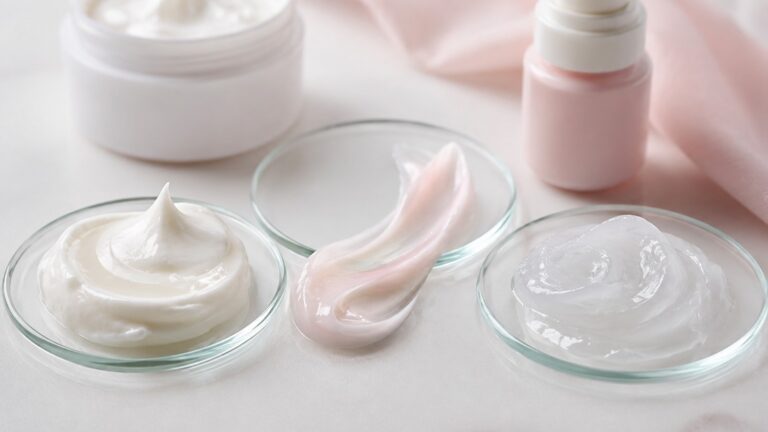
Creams and lotions are emulsions: mixtures of oil and water held together by emulsifiers. HLB (hydrophilic-lipophilic balance) describes how an emulsifier behaves. “Phase” refers to the oil phase, water phase, or cool-down phase of a batch.
When a supplier says a formula is “HLB-matched,” they mean the emulsifier system suits the chosen oils. This affects stability and how the product feels on skin.
Viscosity, pH, and Preservative System
Viscosity is thickness; lotions are typically thinner than creams. pH affects preservative performance and skin comfort. The preservative system keeps the product safe during use and is often the most debated part of a brief.
Ask for target pH and viscosity ranges on the specification sheet, not just “typical” values. Challenge testing results should accompany any preservative change.
Key Terms at a Glance
- O/W and W/O emulsion: oil-in-water (lighter) versus water-in-oil (richer) systems.
- Active level: the percentage of a functional ingredient in the formula.
- Base: the carrier formula before actives are added.
- Texture profile: spreadability, absorption speed, and after-feel.
- Fragrance-free vs unscented: fragrance-free means no fragrance added; unscented may contain masking agents.
Production and Quality Terms That Protect Your Brand
Production vocabulary tells you how a factory controls consistency. For Italian buyers shipping across the EU, these terms also feed directly into documentation and traceability requirements.
Batch, Bulk, and Fill
A batch is one production run with a unique code. Bulk is the finished liquid before filling. Fill refers to dispensing product into primary packaging. Batch records should link bulk and fill dates for traceability.
GMP, QC, and CoA
GMP (Good Manufacturing Practice) is the quality system standard. QC (quality control) covers in-process and finished-product checks. A CoA (Certificate of Analysis) reports measured results against specification.
Review our quality control approach and testing & inspection services to see what a complete QC file includes.
Stability, Compatibility, and Challenge Testing
Stability testing simulates aging to confirm shelf life. Compatibility testing checks formula against packaging, especially pumps and airless systems. Challenge testing verifies preservative efficacy against microbial contamination.
Italian retailers increasingly ask for shelf-life justification. Ask whether accelerated and real-time stability data are both available.
EU Compliance Terms for the Italian Market
Italy applies EU cosmetics rules through national frameworks. Buyers should recognize the core documents and roles before signing a supply agreement.
CPSR, PIF, and Responsible Person
The CPSR (Cosmetic Product Safety Report) is prepared by a qualified safety assessor. The PIF (Product Information File) compiles safety, manufacturing, and claims data. The Responsible Person is the legal entity accountable for compliance in the EU.
For official detail, consult the EU cosmetics regulation pages and ISO standards such as ISO 22716 for GMP guidance.
CPNP Notification and Claims
CPNP (Cosmetic Product Notification Portal) is the EU notification system. Claims language must be substantiated; avoid medical assertions and use phrasing such as “helps improve the appearance of.” Italian consumers respond well to clear, evidence-backed claims.
Practical Sourcing Steps for 2027
Use the glossary actively rather than passively. The following workflow turns vocabulary into a repeatable sourcing process for Italian buyers.
- Write a one-page brief using glossary terms: model, formula direction, target pH and viscosity, claims, and packaging format.
- Request two or three sample options across base textures before committing to a formula.
- Confirm MOQ, lead time, and Incoterms in the quotation, including artwork approval milestones.
- Collect compliance documents early: CPSR, PIF outline, CoA, and stability summary.
- Agree on a change-control process for any formula or packaging substitution.
Our sample development team can align these steps with your timeline, and export support helps Italian importers prepare documentation for customs and retail audits.
Case Evidence: How Glossary Clarity Saves Time
In the UK, a skincare brand reduced sampling rounds from four to two after rewriting its brief using shared ODM terminology. The key change was separating “texture target” from “active level” in the specification.
In the UAE, a distributor avoided a packaging delay by confirming compatibility testing requirements before tooling began. In Australia, an e-commerce seller cut claim-review time by submitting a claims matrix alongside the formula brief.
These examples are illustrative and anonymized, but the pattern is consistent: shared vocabulary shortens review cycles. Buyers who treat a cream lotion glossary italy reference as a working document, not a reading exercise, move faster from concept to shelf.
FAQ
What is the difference between OEM and ODM in cream and lotion manufacturing?
OEM usually means the buyer drives the formula and the factory manufactures to that brief. ODM means the manufacturer offers a proven base formula that the buyer adjusts and brands. Ownership and MOQ differ, so confirm both in writing.
Do I need a CPSR to sell cream and lotion in Italy?
Yes. Products sold in the EU, including Italy, require a Cosmetic Product Safety Report and a Product Information File, with a Responsible Person established in the EU. CPNP notification is also required before placing the product on the market.
How long does private label cream and lotion development take?
Timelines vary by formula complexity and packaging. A typical private label project with a ready base may take several weeks for sampling plus bulk production and transit. Custom formulas with stability and challenge testing take longer.
What does MOQ mean for Italian importers?
MOQ is the minimum order quantity a factory will produce economically. Ask whether it applies per SKU or per formula family, and whether packaging MOQs differ from bulk MOQs, as this affects total launch cost.
Which documents should I request before bulk production?
Request the specification sheet, CoA, stability summary, CPSR, and packaging compatibility report. Also confirm the batch coding and traceability process so retail audits and recalls can be handled quickly.

 Scan to WhatsApp
About the Author
David Zhang has spent years in skincare formulation and quality control at Flavor Sources, a GMP ISO 22716-certified private label manufacturer based in Dongguan, China, serving brands in 50+ countries since 2000. Reach out to David's team for a custom formula consultation →
Ready to Source Cream & Lotion with Confidence?
Turn this glossary into action. Review our Cream & Lotion range, then request a sample or get a quote tailored to your Italian market plan for 2027. Our team supports brands, importers, and distributors with clear terminology, documented quality, and export-ready production.