The Complete 2027 Guide to Facial & Body Mask Compliance Certification for Smart Spa & Salon Owners
As a spa or salon owner, ensuring facial body mask compliance certification spa salon owners is essential for 2027. This guide simplifies the complex regulatory landscape, covering EU CPSR, FDA MoCRA, ISO 22716, and halal certification. Learn actionable steps to source compliant products, protect your business, and maintain client trust.
Table of Contents
Why Compliance Certification Is Non-Negotiable for Spa & Salon Owners
The global beauty industry is tightening regulations. For spa and salon owners, offering facial and body masks that don't meet compliance standards can lead to legal penalties, product recalls, and reputational damage. In 2027, authorities will enforce stricter rules, especially in the EU and US. Facial body mask compliance certification spa salon owners must prioritize to avoid disruptions. This section outlines the key regulations and why they matter.
The Evolving Regulatory Landscape
Regulations like the EU Cosmetics Regulation (EC) No 1223/2009 and the US FDA's MoCRA (Modernization of Cosmetics Regulation Act) are becoming more stringent. The EU requires a Cosmetic Product Safety Report (CPSR) for each product, while MoCRA mandates facility registration and product listing. Additionally, ISO 22716 provides guidelines for Good Manufacturing Practices (GMP). Understanding these frameworks is the first step toward compliance.
Risks of Non-Compliance
Selling non-compliant masks can result in fines, seizure of goods, and even criminal charges. For example, in the EU, authorities can order recalls and impose penalties. In the US, the FDA can take action against adulterated or misbranded products. Beyond legal risks, non-compliance erodes customer trust. Spa and salon clients expect safe, high-quality products. Ensuring compliance protects your brand reputation and bottom line.
Key Compliance Certifications for Facial & Body Masks
To navigate 2027 regulations, focus on these certifications: EU CPSR, FDA MoCRA, ISO 22716, and halal certification. Each plays a distinct role in ensuring product safety and market access. The table below summarizes their requirements and scope.
| Certification | Region | Requirement | Scope |
|---|---|---|---|
| EU CPSR | European Union | Safety assessment by a qualified assessor | Mandatory for all cosmetic products |
| FDA MoCRA | United States | Facility registration, product listing, adverse event reporting | Mandatory for cosmetics |
| ISO 22716 | International | GMP guidelines for cosmetics | Voluntary but widely recognized |
| Halal Certification | Global (Muslim markets) | Compliance with Islamic dietary and hygiene laws | Voluntary, but essential for halal-conscious consumers |
EU CPSR: The Gateway to European Markets
The Cosmetic Product Safety Report (CPSR) is a mandatory requirement for selling cosmetics in the EU. It involves a safety assessment of each ingredient and the final product, conducted by a qualified safety assessor. The CPSR must be kept up-to-date and made available to authorities upon request. For spa and salon owners sourcing from manufacturers, ensure your supplier provides a valid CPSR for each facial and body mask. Without it, your products cannot be legally sold in the EU.
FDA MoCRA: Compliance for the US Market
The FDA's Modernization of Cosmetics Regulation Act (MoCRA) represents the most significant update to US cosmetics law since 1938. It requires cosmetic facilities to register with the FDA, list products, and report adverse events. For spa and salon owners, this means verifying that your manufacturer is MoCRA-compliant. If you import masks, ensure they meet FDA labeling and safety requirements. Non-compliance can lead to enforcement actions, including injunctions and seizures.
ISO 22716: GMP for Quality Assurance
ISO 22716 provides guidelines for Good Manufacturing Practices (GMP) specific to the cosmetics industry. While voluntary, it is a benchmark for quality and safety. Choosing a manufacturer with ISO 22716 certification ensures that products are produced under controlled conditions, reducing the risk of contamination and inconsistencies. For spa and salon owners, this translates to reliable, high-quality masks that meet client expectations.
Halal Certification: Accessing Muslim Markets
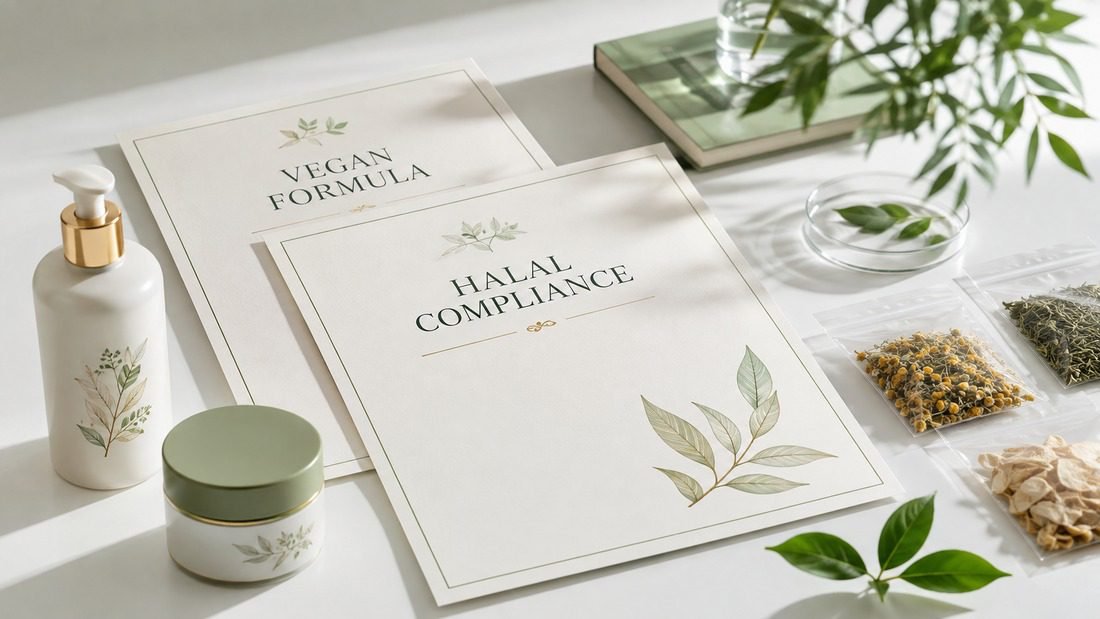
Halal certification confirms that a product complies with Islamic law, including the absence of prohibited ingredients (e.g., alcohol, animal derivatives) and adherence to hygienic practices. For spa and salon owners targeting Muslim-majority markets or halal-conscious consumers, halal-certified facial and body masks are essential. This certification also signals ethical sourcing and quality, appealing to a broader audience.
Step-by-Step Guide to Achieving Compliance
Achieving compliance requires a systematic approach. Follow these steps to ensure your facial and body masks meet 2027 regulations.
1. Assess Your Product Portfolio
Review all facial and body masks you offer. Identify which products require certification based on the markets you serve. For example, if you sell in the EU, every product needs a CPSR. If you sell in the US, ensure MoCRA compliance. Create a checklist of required certifications for each product and market.
2. Choose a Compliant Manufacturer
Partner with a manufacturer that holds the necessary certifications. Look for ISO 22716, GMP, and FDA registration. For halal products, verify halal certification. Request copies of certificates and safety reports. A reliable manufacturer will provide transparent documentation and support your compliance efforts. At Flavor Sources, we offer Facial & Body Mask with full compliance support, including CPSR, MoCRA, and halal certification.
3. Verify Documentation
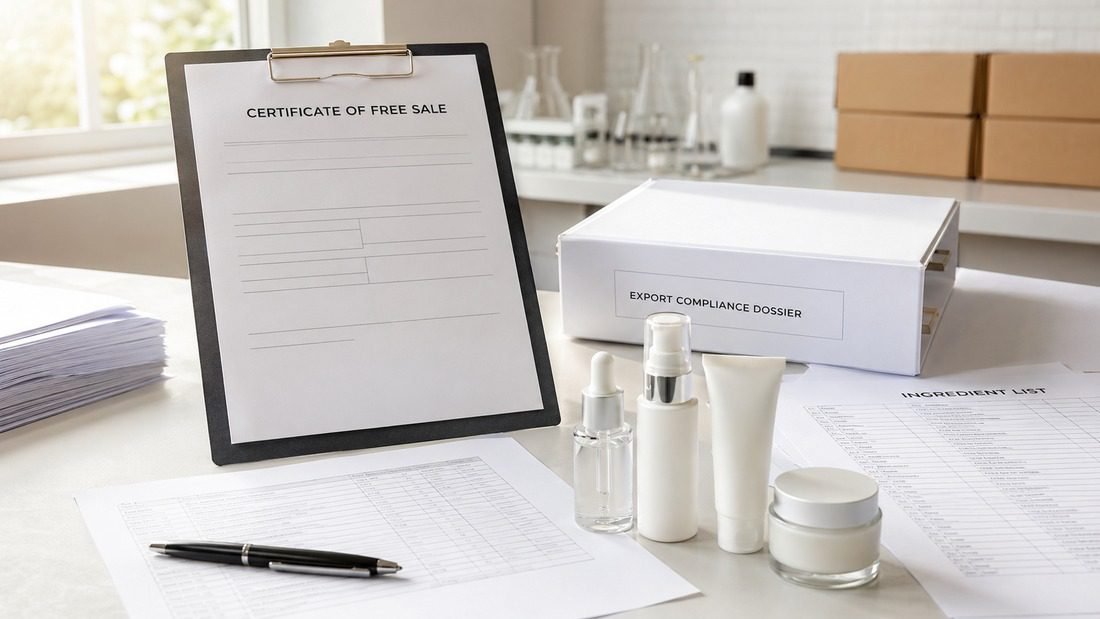
Obtain and review all relevant documents: CPSR, GMP certificates, FDA registration, and halal certificates. Ensure they are current and cover the specific products you source. Check that the CPSR is signed by a qualified assessor and includes all ingredients. For MoCRA, confirm the facility registration and product listing. Keep copies on file for at least five years.
4. Implement Quality Control
Establish quality control procedures to ensure ongoing compliance. This includes regular audits of your manufacturer, batch testing, and adverse event reporting. Train staff on proper handling and storage. Document everything. Quality control is not just about compliance; it also ensures product efficacy and customer satisfaction.
5. Stay Informed
Regulations evolve. Subscribe to updates from regulatory bodies like the FDA and EU Cosmetics. Attend industry webinars and trade shows. Join professional associations. By staying informed, you can anticipate changes and adapt your compliance strategy accordingly.
Case Studies: Real-World Compliance Success
Spa and salon owners worldwide have successfully navigated compliance. Here are examples from different regions.
UK: EU CPSR Compliance Post-Brexit
A UK-based spa chain wanted to expand to the EU. They sourced facial masks from a manufacturer without CPSR, leading to customs seizures. After partnering with a compliant supplier, they obtained CPSR for all products, enabling smooth entry into the EU market. Sales increased by 30% within six months.
UAE: Halal Certification Opens Doors
A luxury salon in Dubai aimed to attract Muslim clients. They switched to halal-certified body masks, which boosted customer trust. The salon reported a 25% increase in repeat clients and expanded to two new locations. Halal certification became a key marketing point.
US: MoCRA Preparedness
A US-based spa owner faced potential FDA warning letters for selling unregistered products. They worked with a MoCRA-compliant manufacturer, registered their facility, and listed products. The spa avoided penalties and enhanced its reputation for safety.
Australia: ISO 22716 for Quality Assurance
An Australian salon chain prioritized quality by sourcing from an ISO 22716-certified manufacturer. This reduced product complaints by 40% and improved client satisfaction. The certification also helped them secure partnerships with premium brands.
Frequently Asked Questions
What is the difference between EU CPSR and FDA MoCRA?
EU CPSR is a safety assessment required for cosmetics in the EU, while FDA MoCRA is a US regulation mandating facility registration and product listing. Both aim to ensure product safety but apply in different jurisdictions.
How often do certifications need to be renewed?
CPSR does not have a fixed expiry but must be updated if the formulation changes. MoCRA registration must be renewed every two years. ISO 22716 certification typically requires annual audits. Halal certification renewal varies by certifying body.
Can I sell non-compliant masks in the US?
No. Selling cosmetics that do not meet FDA MoCRA requirements can lead to enforcement actions, including fines and product seizures. Compliance is mandatory.
Is halal certification necessary for all markets?
No, but it is essential for targeting Muslim-majority markets and halal-conscious consumers. It also demonstrates ethical practices, which can be a selling point globally.
How do I verify a manufacturer's compliance?
Request copies of certificates (e.g., ISO 22716, halal) and safety reports (CPSR). Check FDA registration status. Conduct audits or third-party inspections if needed.
Author Trust Module

 Scan to WhatsApp
About the Author
David Zhang has spent years in skincare formulation and quality control at Flavor Sources, a GMP ISO 22716-certified private label manufacturer based in Dongguan, China, serving brands in 50+ countries since 2000. Reach out to David's team for a custom formula consultation →
Ready to Ensure Your Spa's Compliance?
Don't let compliance challenges hold your business back. Partner with a trusted manufacturer like Flavor Sources. We provide fully certified facial and body masks, including EU CPSR, FDA MoCRA, ISO 22716, and halal options. Our team supports you every step of the way. Request a sample or get a quote today to secure your 2027 compliance.