Serum Sourcing in Canada: Complete 2028 Guide to Lead Time & Logistics for Private Label Serum Importers
For private label serum importers, Canada lead time logistics is a critical factor in supply chain success. Typical serum lead times from Asia to Canada range from 45 to 90 days, including production, quality testing, and shipping. Understanding each stage helps you plan inventory, avoid stockouts, and maintain reliable delivery to your customers.
Table of Contents
- What Does ‘Lead Time & Logistics' Really Mean for Serum Importers?
- The Serum Production Timeline: From PO to Port
- Key Logistics Challenges for Canadian Serum Importers
- Practical Tips to Optimize Lead Time and Logistics
- Case Examples: How Importers in Canada and Beyond Manage Serum Logistics
- Frequently Asked Questions
- 1. What is the typical lead time for private label serum from China to Canada?
- 2. Can I expedite the serum production timeline?
- 3. What documents are required for serum imports into Canada?
- 4. How can I reduce serum international freight skincare costs?
- 5. Is temperature-controlled shipping necessary for serums?
- 6. How do I choose the right serum manufacturer for export to Canada?
- Ready to Streamline Your Serum Sourcing?
What Does ‘Lead Time & Logistics' Really Mean for Serum Importers?
Lead time is the total time from order placement to delivery at your Canadian warehouse. For serum, this includes sample development, bulk production, quality control, export preparation, ocean or air freight, customs clearance, and inland transport. Logistics covers the coordination of these steps, including documentation, carrier selection, and risk management.
Many Canadian importers underestimate the complexity of serum logistics. Unlike dry goods, serums often contain active ingredients that may require temperature control or specific packaging. A delay at any stage can push back your launch date or cause stockouts. Therefore, mapping out every phase is essential.
The Serum Production Timeline: From PO to Port
Understanding the production timeline helps you set realistic expectations. Below is a breakdown of typical lead times for a private label serum order.
Sample Development and Approval (7–15 Days)
Before bulk production, you need to approve a sample. This stage includes formula customization, packaging selection, and sample creation. At Flavor Sources, we offer Sample Development to streamline this process. For Canadian importers, shipping samples via express courier takes 3–5 days.
Bulk Production and Quality Control (20–35 Days)
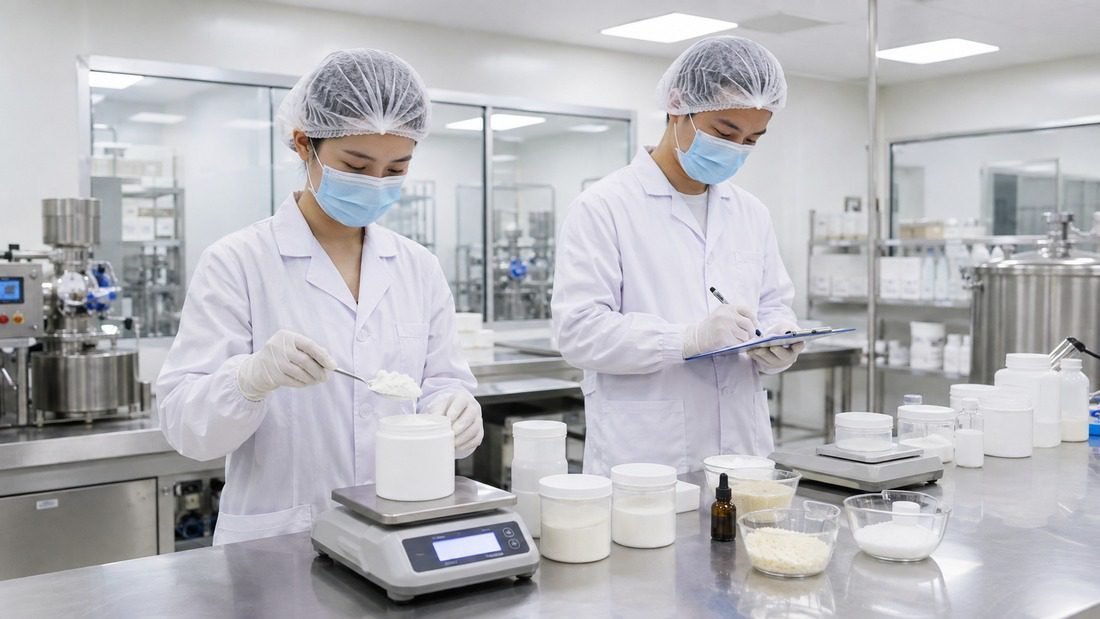
Once the sample is approved, bulk production begins. This includes sourcing raw materials, compounding, filling, and packaging. Quality control tests ensure the serum meets specifications. Our Testing & Inspection protocols help catch issues early. Production time varies based on order size and formula complexity.
Export Documentation and Booking (5–10 Days)
After production, we prepare export documents such as commercial invoice, packing list, and certificate of origin. We also book freight with your preferred carrier or our trusted partners. Proper documentation prevents customs delays.
Shipping: Ocean vs. Air Freight
Shipping time from China to Canada depends on the mode:
| Method | Transit Time | Cost | Best For |
|---|---|---|---|
| Ocean Freight (LCL) | 25–35 days | Lower | Large orders, non-urgent |
| Ocean Freight (FCL) | 20–30 days | Moderate | Full container loads |
| Air Freight | 5–10 days | Higher | Urgent, small batches |
| Express Courier | 3–7 days | Highest | Samples, tiny orders |
Ocean freight is most common for serum imports due to cost efficiency, but air freight is useful for launch deadlines. Note that serum is liquid and may face restrictions; proper packaging and MSDS are required.
Customs Clearance and Inland Delivery (5–10 Days)
Once the shipment arrives at a Canadian port, customs clearance takes 1–5 days if documents are in order. Then, inland transport to your warehouse adds 2–5 days. Working with a customs broker familiar with cosmetics imports can speed this up.
Key Logistics Challenges for Canadian Serum Importers
Several factors can extend lead times. Being aware of them helps you mitigate risks.
Regulatory Compliance
Health Canada requires cosmetics to meet safety and labeling standards. While not as stringent as pharmaceuticals, serums with active ingredients may need additional documentation. Ensure your manufacturer provides a Certificate of Free Sale and Cosmetic Notification Form. Flavor Sources offers Export Support to help with compliance.
Temperature Sensitivity
Some serum formulas are sensitive to extreme temperatures. During ocean freight, containers can experience temperature fluctuations. If your serum requires climate-controlled shipping, expect higher costs and longer lead times. Discuss with your manufacturer about stability testing.
Port Congestion and Seasonal Delays
Canadian ports like Vancouver and Montreal can face congestion, especially during peak seasons (e.g., Q4). Chinese New Year also halts production for 2–3 weeks. Plan orders around these events.
Documentation Errors
Incomplete or inaccurate paperwork is a leading cause of customs delays. Double-check that your commercial invoice, packing list, and MSDS are consistent. Using a reliable freight forwarder reduces this risk.
Practical Tips to Optimize Lead Time and Logistics
As a private label serum importer, Canada lead time logistics can be managed effectively with these strategies:
- Forecast demand accurately: Use historical sales data to predict order volumes. Avoid last-minute orders.
- Build buffer time: Add 2–3 weeks to estimated lead times to account for unforeseen delays.
- Choose the right shipping method: For urgent launches, air freight may be worth the extra cost. For regular restocks, ocean freight is economical.
- Consolidate shipments: If you import multiple products, consolidate them into one shipment to save on freight and customs clearance.
- Work with an experienced manufacturer: A manufacturer with export expertise can guide you through the process. Flavor Sources has a dedicated For Importers program.
- Leverage technology: Use tracking tools and communicate regularly with your supplier and freight forwarder.
Case Examples: How Importers in Canada and Beyond Manage Serum Logistics
While we cannot name specific clients, we can share anonymized examples from various markets.
- Canada: A beauty brand in Toronto ordered 10,000 units of a vitamin C serum. By planning 90 days ahead and using ocean freight, they achieved a landed cost 30% lower than air freight, with delivery in 70 days.
- UK: A London-based retailer imported a hyaluronic acid serum via air freight to meet a holiday launch. Despite higher costs, they avoided stockouts and captured seasonal demand.
- UAE: A Dubai distributor consolidated three serum SKUs into one FCL shipment, reducing per-unit freight cost by 25%.
- Australia: A Sydney e-commerce seller used express courier for a small batch of samples, then switched to ocean freight for bulk orders, balancing speed and cost.
These examples show that with proper planning, serum sourcing from Asia can be efficient and cost-effective.
Frequently Asked Questions
1. What is the typical lead time for private label serum from China to Canada?
Typically 45–90 days, depending on production complexity and shipping method. Ocean freight adds 20–35 days, while air freight adds 5–10 days.
2. Can I expedite the serum production timeline?
Yes, by choosing air freight and paying for expedited production. However, rush fees may apply. Communicate your deadline early.
3. What documents are required for serum imports into Canada?
You need a commercial invoice, packing list, bill of lading, certificate of origin, MSDS, and possibly a Cosmetic Notification Form. Check with Health Canada for latest requirements.
4. How can I reduce serum international freight skincare costs?
Consolidate shipments, use ocean freight for large orders, and negotiate rates with freight forwarders. Also, consider ordering in larger quantities to benefit from economies of scale.
5. Is temperature-controlled shipping necessary for serums?
Not all serums require it, but those with heat-sensitive actives may. Consult your manufacturer for stability data. Temperature-controlled shipping increases cost and lead time.
6. How do I choose the right serum manufacturer for export to Canada?
Look for experience with Canadian regulations, export documentation support, and quality certifications. Flavor Sources provides comprehensive Export Support and has a proven track record with Canadian importers.

 Scan to WhatsApp
About the Author
David Zhang has spent years in skincare formulation and quality control at Flavor Sources, a GMP ISO 22716-certified private label manufacturer based in Dongguan, China, serving brands in 50+ countries since 2000. Reach out to David's team for a custom formula consultation →
Ready to Streamline Your Serum Sourcing?
If you're a private label serum importer, Canada lead time logistics doesn't have to be a headache. Partner with a manufacturer who understands the nuances of export to Canada. Flavor Sources offers end-to-end solutions, from Custom Formula to Bulk Production. To get started, request a sample or get a quote today. Let us help you bring your serum to the Canadian market efficiently and reliably.